
IRLJ 6.1 Time: Understanding Washington Traffic Infraction Deadlines
Time limits are critical in Washington traffic infraction cases. IRLJ 6.1 establishes how courts calculate filing deadlines and explains when those deadlines may—or may not—be extended. Missing an important deadline can result in the loss of valuable legal rights, making it essential to understand how this rule applies.
Whether you have received a traffic ticket or are considering an appeal, IRLJ 6.1 helps determine how time is computed throughout the case.
What Is IRLJ 6.1?
IRLJ 6.1 provides:
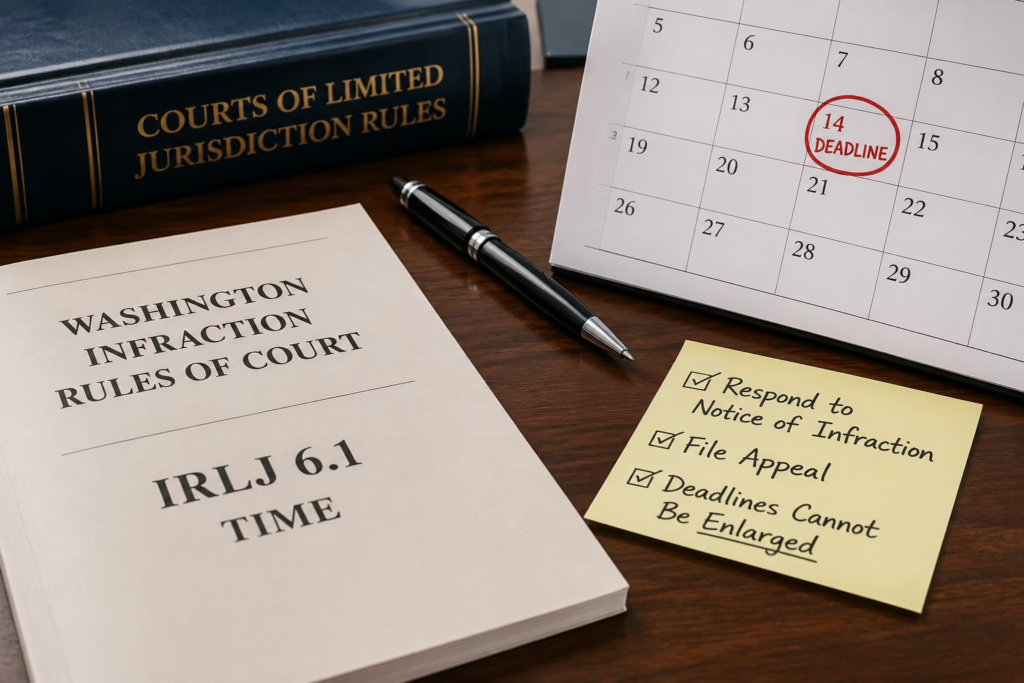
“Time shall be computed or enlarged as provided in CRLJ 6, except that the time in which to respond to the notice of infraction under rule 2.4 and the time in which to file an appeal may not be enlarged.”
In simple terms, the rule adopts the general time-computation provisions found in Civil Rules for Courts of Limited Jurisdiction (CRLJ) 6, while creating two important exceptions.
How Are Deadlines Calculated?
General Rule
Most deadlines under the Infraction Rules are calculated according to CRLJ 6. These rules explain:
- When the counting of days begins.
- How weekends and legal holidays affect deadlines.
- When additional time may apply for certain methods of service.
- When courts may enlarge or extend time.
This creates consistency across Washington’s courts of limited jurisdiction.
Deadlines That Cannot Be Extended
Responding to a Notice of Infraction
One of the most important deadlines is the time for responding to a traffic infraction under IRLJ 2.4.
Under IRLJ 6.1, this deadline cannot be enlarged by the court.
If you fail to respond within the required time, the court may:
- Enter a finding that you committed the infraction.
- Assess monetary penalties.
- Notify the Washington Department of Licensing.
- Take additional enforcement action permitted by law.
Filing an Appeal
The second non-extendable deadline involves appeals.
If you wish to appeal a traffic infraction decision, the deadline for filing the appeal cannot be extended under IRLJ 6.1.
Missing the appeal deadline generally means losing the opportunity for appellate review, regardless of the merits of your case.
Why IRLJ 6.1 Matters
Traffic infractions often seem straightforward, but strict procedural rules can significantly affect the outcome.
IRLJ 6.1 ensures that certain deadlines remain firm, promoting:
- Finality of court decisions.
- Efficient case administration.
- Consistent application of Washington’s traffic infraction rules.
Drivers should never assume that a court can simply grant additional time after a deadline has expired.
Practical Tips
If you receive a Washington traffic ticket:
- Read the notice carefully.
- Identify every applicable deadline.
- Respond before the deadline expires.
- Keep copies of all filings.
- Consult an attorney if you are considering contesting the infraction or filing an appeal.
Acting promptly preserves your legal options and helps avoid unnecessary penalties.
Conclusion
IRLJ 6.1 plays an important role in Washington traffic infraction cases by establishing how time is calculated while making clear that two deadlines cannot be extended: the deadline to respond to a notice of infraction and the deadline to file an appeal. Understanding these procedural rules can help drivers protect their rights and avoid losing important opportunities simply because a deadline was missed.
Contact Blanford Law
If you have questions about a Washington traffic infraction or need help protecting your legal rights, contact Blanford Law today at ken@blanfordlaw.com or 253-720-9304 for guidance on your legal matter.
Additional Resources
IRLJ 6.1: Time Limits for Washington Traffic Infractions
Learn how IRLJ 6.1 governs the calculation of deadlines and identifies the response and appeal deadlines that cannot be extended.
https://blanfordlaw.com/irlj-6-1-time-limits/
IRLJ 2.5: Failure to Respond to a Notice of Infraction
Understand the consequences of failing to respond to a Washington traffic infraction, including default judgments and additional penalties.
https://blanfordlaw.com/irlj-25-failure-to-respond/
Washington Supreme Court Emergency Order on Network Outage
Read about the Washington Supreme Court’s emergency order addressing court deadlines and procedures during a statewide network outage.
https://blanfordlaw.com/washington-supreme-court-emergency-order-network-outage/
IRLJ 2.1: Notice of Infraction
Learn what information must be included in a Washington Notice of Infraction and what to do after receiving one.
https://blanfordlaw.com/irlj-2-1-notice-of-infraction/
Traffic Infraction Written Statement (IRLJ 3.5)
Discover how to contest a Washington traffic ticket by submitting a written statement under IRLJ 3.5 instead of appearing in court.
https://blanfordlaw.com/traffic-infraction-written-statement-irlj-3-5-washington/