
Understanding the IRLJ 6.4 Effective Date in Washington Traffic Infraction Cases
Washington traffic infractions are governed by a specific set of procedural rules known as the Infraction Rules for Courts of Limited Jurisdiction (IRLJ). These rules guide how courts process non-criminal violations such as speeding tickets, failure to stop at a stop sign, or other traffic-related infractions.
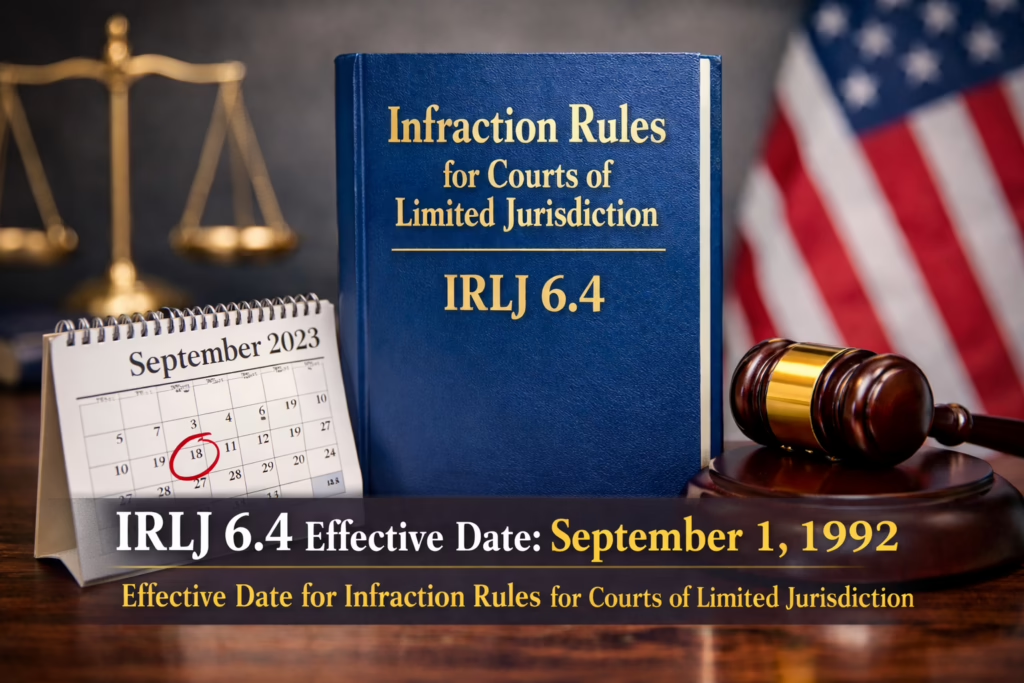
One important procedural rule is IRLJ 6.4, which explains when these rules became applicable to infraction cases. While the rule is brief, the IRLJ 6.4 effective date clarifies the timeline for applying Washington’s modern infraction procedures.
Understanding when these rules apply helps attorneys, courts, and defendants determine which procedures govern a particular traffic case.
What Does IRLJ 6.4 Say?
IRLJ 6.4 states:
These rules shall apply to all infraction cases in which the infraction occurred on or after September 1, 1992.
The rule establishes a clear cutoff date for applying the current version of the infraction rules.
Although the IRLJ rules were originally adopted earlier, the September 1, 1992 amendment ensured that the modern procedures apply to all infractions occurring on or after that date.
Why the IRLJ 6.4 Effective Date Matters
Procedural rules in the legal system are not always retroactive. In many cases, courts must determine which version of the law applies based on the timing of the alleged violation.
The IRLJ 6.4 effective date provides clarity by specifying that the current procedural framework applies to:
- Traffic infractions
- Non-criminal violations
- Infractions handled by district or municipal courts
as long as the infraction occurred on or after September 1, 1992.
This prevents confusion about whether earlier procedural rules should apply.
Courts Covered by the IRLJ Rules
The IRLJ rules apply in Washington courts of limited jurisdiction, which generally include:
District Courts
District courts handle a wide range of matters, including:
- Traffic infractions
- Certain misdemeanors
- Civil cases within jurisdictional limits.
Municipal Courts
Municipal courts typically handle violations of city ordinances, including:
- Traffic infractions within city limits
- Parking violations
- Local code violations.
Because these courts process thousands of traffic tickets every year, having a consistent procedural framework is essential.
Common Cases Governed by IRLJ Rules
The IRLJ rules, including the IRLJ 6.4 effective date provision, apply to many types of non-criminal violations, such as:
- Speeding tickets
- Running a red light
- Failure to stop at a stop sign
- Driving with expired registration
- Seatbelt violations
- Certain parking infractions.
When a driver receives a notice of infraction, the procedures for responding to the ticket, requesting hearings, or contesting the violation are governed by the IRLJ rules.
Historical Background of IRLJ 6.4
The Infraction Rules for Courts of Limited Jurisdiction were originally adopted January 1, 1981 as part of Washington’s effort to standardize procedures for handling traffic infractions.
In 1992, the rules were amended and updated. The amendment clarified that the rules apply to all infractions occurring on or after September 1, 1992.
Since that time, Washington courts have relied on the IRLJ framework to process traffic infraction cases in a consistent and efficient manner.
Why Understanding Court Rules Matters
Although traffic infractions are not criminal charges, they can still have significant consequences. Failing to respond to a notice of infraction or misunderstanding court procedures may result in:
- Monetary penalties
- Default judgments
- Department of Licensing consequences
- Difficulty contesting the ticket later.
Understanding rules like the IRLJ 6.4 effective date can help drivers better navigate Washington’s court system and ensure their rights are protected.
Contact Blanford Law for Help With Traffic Infractions
If you have received a traffic ticket or have questions about Washington traffic infraction procedures, legal guidance may help you understand your options and protect your rights.
Contact Blanford Law today at ken@blanfordlaw.com or 253-720-9304 for guidance on your legal matter.
Additional Resources
Understanding IRLJ 1.1: Infractions
This article explains how Washington law defines traffic infractions and outlines the procedures courts follow when handling non-criminal violations.
https://blanfordlaw.com/understanding-irlj-1-1-infractions/
IRLJ 1.3: Infraction Rules Explained
Learn how the Infraction Rules for Courts of Limited Jurisdiction operate within Washington’s court system and guide the handling of traffic infractions.
https://blanfordlaw.com/irlj-1-3-infraction-rules/
IRLJ 6.5: Rules Superseded
This resource discusses how IRLJ 6.5 clarifies which other procedural rules are replaced or superseded by the Infraction Rules for Courts of Limited Jurisdiction.
https://blanfordlaw.com/irlj-6-5-rules-superseded/
IRLJ 1.2: Purpose of the Infraction Rules
Explore the purpose behind the Infraction Rules for Courts of Limited Jurisdiction and how they promote fair and efficient resolution of traffic infractions in Washington courts.
https://blanfordlaw.com/irlj-1-2-infraction-rule/