
IRLJ 6.5 Rules Superseded: Understanding the Transition to Washington’s Current Infraction Rules
The Infraction Rules for Courts of Limited Jurisdiction (IRLJ) govern how Washington district and municipal courts handle traffic infractions and other civil infractions. IRLJ 6.5 addresses an important historical issue by explaining which procedural rules were replaced when the current IRLJ became effective.
Although the rule primarily affects older cases, it provides valuable context for attorneys, judges, and anyone researching Washington traffic law.
What Does IRLJ 6.5 Say?
IRLJ 6.5 provides:
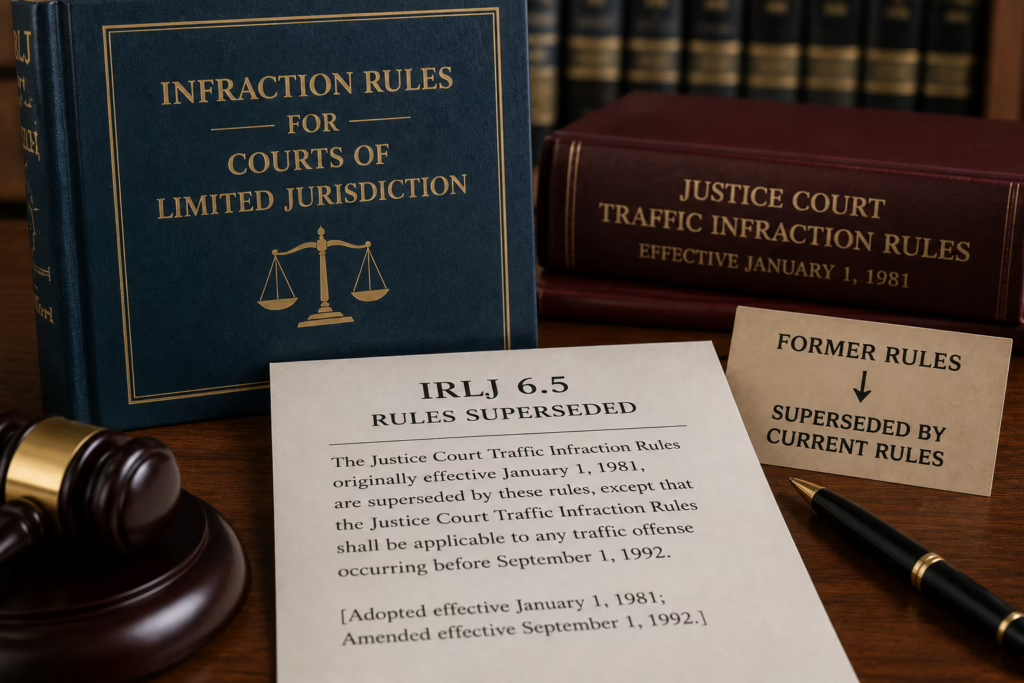
“The Justice Court Traffic Infraction Rules originally effective January 1, 1981, are superseded by these rules, except that the Justice Court Traffic Infraction Rules shall be applicable to any traffic offense occurring before September 1, 1992.”
In short, the rule replaced the former Justice Court Traffic Infraction Rules with the current Infraction Rules for Courts of Limited Jurisdiction, while preserving the earlier rules for traffic offenses that occurred before September 1, 1992.
What Does “Rules Superseded” Mean?
When one set of court rules is superseded, it means a newer set of rules replaces the earlier version.
In this case:
- The former Justice Court Traffic Infraction Rules governed traffic infraction proceedings beginning in 1981.
- On September 1, 1992, the revised Infraction Rules for Courts of Limited Jurisdiction (IRLJ) became the controlling procedural rules.
- Traffic offenses committed before that date continue to be governed by the earlier rules.
This approach ensured a smooth transition while avoiding confusion for cases already pending under the previous procedures.
Why Is September 1, 1992 Important?
September 1, 1992, marks the effective date of the revised IRLJ.
Using the date of the offense—rather than the date a hearing is held or a case is resolved—provides a clear rule for determining which procedural framework applies.
Today, virtually every traffic infraction case falls under the current IRLJ because offenses occurring before September 1, 1992, are now exceedingly rare.
Why Does IRLJ 6.5 Still Matter?
Although IRLJ 6.5 rarely affects modern traffic cases, it remains important because it:
- Documents the transition from the former procedural rules.
- Provides historical context for older appellate decisions.
- Helps attorneys researching pre-1992 cases.
- Clarifies which rules govern historical traffic offenses.
Many published Washington court opinions cite the former Justice Court Traffic Infraction Rules, making IRLJ 6.5 a useful reference when reviewing older case law.
Relationship to IRLJ 6.4
IRLJ 6.5 works closely with IRLJ 6.4, which establishes the effective date of the current Infraction Rules.
Together, these rules explain:
- IRLJ 6.4 — When the current rules became effective.
- IRLJ 6.5 — Which earlier rules were replaced and when they continue to apply.
Together, they provide a complete picture of the transition to Washington’s modern traffic infraction procedures.
Conclusion
IRLJ 6.5 confirms that Washington’s Infraction Rules for Courts of Limited Jurisdiction replaced the former Justice Court Traffic Infraction Rules, while preserving the earlier rules for traffic offenses committed before September 1, 1992. Although primarily historical today, the rule continues to provide important guidance when interpreting older traffic infraction cases and understanding the evolution of Washington’s procedural rules.
Contact Blanford Law
If you have questions about a Washington traffic infraction or need legal guidance regarding court procedures, contact Blanford Law today at ken@blanfordlaw.com or 253-720-9304 for assistance with your legal matter.
Additional Resources
IRLJ 6.5: Rules Superseded
Learn how IRLJ 6.5 replaced the former Justice Court Traffic Infraction Rules and explains when the earlier rules continue to apply to older traffic offenses.
https://blanfordlaw.com/irlj-6-5-rules-superseded/
Kittitas County to Install or Replace Over 200 Traffic and Road Signs
Read about Kittitas County’s roadway improvement project and how updated traffic signs can enhance driver safety and compliance with Washington traffic laws.
https://blanfordlaw.com/kittitas-county-set-to-install-or-replace-over-200-traffic-and-road-signs/
IRLJ 6.4: Effective Date of the Infraction Rules
Discover when Washington’s current Infraction Rules for Courts of Limited Jurisdiction became effective and which cases they govern.
https://blanfordlaw.com/irlj-6-4-effective-date/
Understanding IRLJ 1.1: Infractions in Washington
Explore the purpose and scope of the Infraction Rules for Courts of Limited Jurisdiction and how they provide the procedural framework for Washington infraction cases.
https://blanfordlaw.com/understanding-irlj-1-1-infractions/