
Introduction
The Washington Supreme Court’s decision in State v. Krause clarifies when courts must grant a motion to sever criminal charges. The case focuses on the standard under CrR 4.4 and how courts balance potential prejudice against the benefits of trying multiple charges together.
At issue was whether the trial court abused its discretion in denying severance in a multi-victim sexual assault case.
Background of State v. Krause
Cole Krause was charged with multiple counts of rape involving three different victims. Each victim testified that the encounters were nonconsensual, while Krause argued the encounters were consensual.
Before and during trial, Krause moved several times to sever the charges into separate trials. The trial court denied those motions, finding:
- The charges were related
- The evidence was largely cross-admissible
- The defenses were similar
- The jury could consider each charge separately
A jury convicted Krause on all counts. The Court of Appeals reversed, but the Washington Supreme Court granted review.
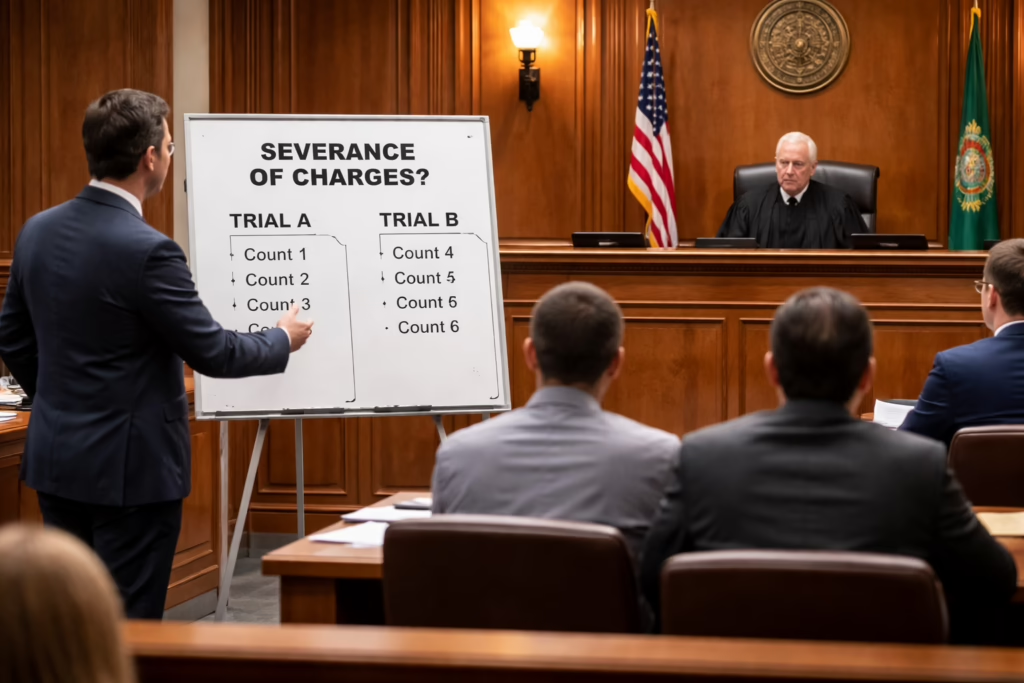
Severance of Charges Washington Law
CrR 4.4 Standard
Under CrR 4.4(b), a court must grant severance if it will “promote a fair determination” of guilt or innocence.
Washington courts analyze severance using four key factors:
- Strength of the State’s evidence
- Clarity of defenses
- Ability to instruct the jury properly
- Cross-admissibility of evidence
No single factor controls—the court must consider them together.
The Legal Issue in State v. Krause
The Washington Supreme Court addressed:
Whether the trial court abused its discretion by denying severance of multiple rape charges involving different victims.
The Majority Opinion
No Abuse of Discretion
The Court held that the trial court did not abuse its discretion in denying severance.
The standard is highly deferential: a ruling is reversed only if no reasonable judge would have made the same decision.
Step One: The Four-Factor Test
The Court carefully analyzed each factor.
1. Strength of the Evidence
The evidence on each count was similar. Each victim testified to lack of consent, and the trial court was entitled to weigh that similarity.
2. Clarity of Defenses
Krause’s primary defense—consent—was the same across charges, reducing risk of jury confusion.
3. Jury Instructions
The jury was instructed to consider each count separately, which supported joinder.
4. Cross-Admissibility
Some evidence would not have been cross-admissible, but there was meaningful overlap—particularly regarding the victims’ relationships and reporting decisions.
This factor slightly favored severance, but it was not dispositive.
Step Two: Weighing Prejudice vs. Benefits
Even where some prejudice exists, courts must weigh it against the benefits of joinder.
The Court found:
- The same witnesses would likely testify in multiple trials
- The victims’ accounts were interconnected
- Separate trials would impose significant burdens on victims
These factors supported trying the charges together.
Distinguishing Prior Cases
The Court distinguished cases like Bluford and Slater, where joinder was improper because:
- The charges were unrelated
- There was little or no evidentiary overlap
In contrast, Krause involved connected allegations and overlapping testimony.
Key Holding
The Washington Supreme Court held:
- The trial court properly denied severance
- Any potential prejudice did not outweigh the benefits of joinder
- The Court of Appeals erred in reversing
The case was reversed and remanded.
Why This Case Matters
High Deference to Trial Courts
Severance decisions are reviewed for abuse of discretion, making reversal difficult.
Cross-Admissibility Is Important—but Not Decisive
Even when some evidence is not cross-admissible, severance is not automatically required.
Victim and Efficiency Considerations Matter
The Court emphasized:
- overlapping witnesses
- impact on victims
- practical realities of multiple trials
Severance of Charges Washington: Key Takeaways
1. Severance Is Not Favored
Washington law generally supports trying related charges together.
2. Courts Use a Multi-Factor Test
No single factor determines the outcome.
3. Prejudice Must Be Significant
A defendant must show manifest prejudice to justify severance.
Call to Action
If you are facing multiple charges or believe your trial was unfairly structured, understanding severance law is critical.
Contact Blanford Law today at ken@blanfordlaw.com or 253-720-9304 for guidance on your legal matter.
Additional Resources
Internal Links
Affidavit of Prejudice in Washington: State v. French
Explains how defendants can seek judicial disqualification and the procedural requirements under Washington law.
https://blanfordlaw.com/the-affidavit-of-prejudice-in-state-v-french-exploring-legal-implications-88-wn-app-586-wash-ct-app-1997/
Granting a Continuance in Washington Criminal Cases
Discusses when courts may grant or deny continuances and how discretion impacts trial fairness.
https://blanfordlaw.com/granting-continuance-discretionary/
Childhood Abuse Protections in Washington Supreme Court Cases
Examines how Washington courts address sensitive abuse claims and protect victims during litigation.
https://blanfordlaw.com/childhood-abuse-protections-washington-supreme-court/
Right to a Fair Trial and Conviction Reversal
Outlines when trial errors can lead to reversal and how appellate courts analyze fairness.
https://blanfordlaw.com/56-right-to-fair-trial-conviction-reversal/
Statute of Limitations for Childhood Abuse in Washington
Provides an overview of filing deadlines and legal exceptions in abuse-related cases.
https://blanfordlaw.com/childhood-abuse-statute-limitations/