
If you receive a traffic ticket in Washington State and lose at a contested hearing, you may wonder whether you can appeal the court’s decision. The answer depends on the specific type of order entered by the court. Under Infraction Rules for Courts of Limited Jurisdiction (IRLJ) 5.1, only certain traffic infraction decisions may be appealed.
Understanding the limits of a traffic infraction appeal is important because Washington courts do not permit appeals from every ruling made during an infraction case.
What Is IRLJ 5.1?
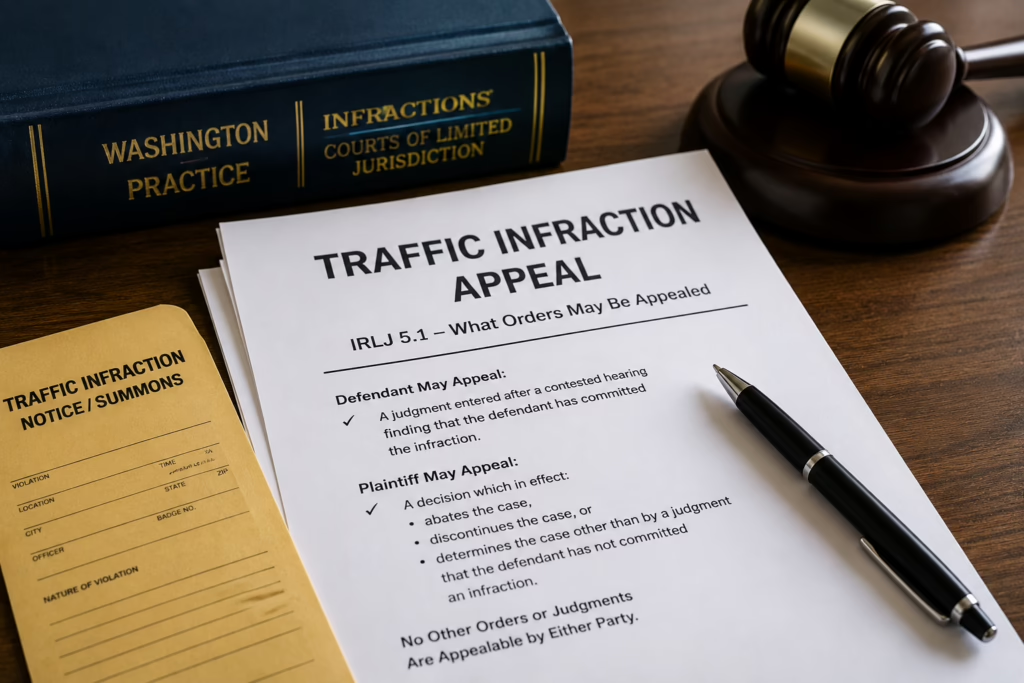
IRLJ 5.1 governs which orders may be appealed in Washington traffic infraction cases. The rule provides:
A defendant may appeal a judgment entered after a contested hearing finding that the defendant committed the infraction.
The rule also permits limited appeals by the plaintiff, typically a city or county prosecutor, in certain circumstances.
However, IRLJ 5.1 makes clear that not every court decision is appealable.
When Can a Driver Appeal a Traffic Infraction?
A driver may appeal when:
- A contested hearing was held;
- The court found the driver committed the infraction; and
- A judgment was entered against the driver.
This means that if you challenged a traffic ticket and the judge ruled against you after hearing evidence, you generally have the right to seek appellate review.
Common examples include:
- Speeding tickets;
- Red-light violations;
- Failure to yield citations;
- Following too closely citations;
- Other non-criminal traffic infractions.
An appeal is not a new trial. Instead, the appellate court reviews the record created in the lower court to determine whether legal errors occurred.
What Orders Cannot Be Appealed?
IRLJ 5.1 contains a significant limitation:
No other orders or judgments are appealable by either party.
As a result, many procedural rulings cannot be appealed independently.
Examples may include:
- Scheduling decisions;
- Discovery disputes;
- Continuance rulings;
- Intermediate procedural orders;
- Other non-final decisions made before judgment.
The rule focuses on final judgments entered after a contested hearing rather than every decision made during the case.
Can the Government Appeal?
Yes, but only in limited circumstances.
IRLJ 5.1 allows the plaintiff to appeal a decision that effectively:
- Abates the case;
- Discontinues the case; or
- Otherwise determines the case without entering a judgment that the defendant did not commit the infraction.
These situations are relatively uncommon but may arise when a court dismisses an infraction on legal grounds before reaching the merits.
Why Appeal Rights Are Limited
Traffic infractions are designed to be resolved efficiently. Washington’s infraction system differs from criminal prosecutions because traffic infractions are civil matters rather than crimes.
By limiting appeals to final judgments and certain case-dispositive rulings, IRLJ 5.1 helps prevent prolonged litigation over minor traffic matters while still preserving a party’s right to challenge significant legal errors.
Should You Appeal a Traffic Infraction Judgment?
Before filing an appeal, it is important to evaluate:
- Whether a legal error occurred;
- Whether the record supports an appeal;
- The costs involved;
- The potential consequences of the judgment.
Because appeals are governed by strict deadlines and procedural requirements, consulting an attorney promptly can help protect your rights.
Contact Blanford Law
If you have questions about a traffic ticket, contested hearing, or traffic infraction appeal in Washington State, contact Blanford Law today at ken@blanfordlaw.com or 253-720-9304 for guidance on your legal matter.
Additional Resources
Appealing a Traffic Infraction in Washington State
Learn more about the procedures, deadlines, and legal standards involved when challenging an adverse traffic infraction decision in Washington courts.
https://blanfordlaw.com/appealing-traffic-infraction-washington/
IRLJ 3.3 Contested Hearings
A contested hearing is often the prerequisite to an appeal under IRLJ 5.1. This article explains what happens during a contested traffic infraction hearing and how judges evaluate evidence.
https://blanfordlaw.com/irlj-3-3-contested-hearing/
IRLJ 3.2 Failure to Appear
Missing a required court appearance can have significant consequences in a traffic infraction case. Learn how IRLJ 3.2 addresses failures to appear and related court procedures.
https://blanfordlaw.com/irlj-3-2-failure-to-appear/
Washington Courts – Court Rules for Infractions
Review the official Infraction Rules for Courts of Limited Jurisdiction (IRLJ), including the appellate provisions contained in IRLJ 5.1.
https://www.courts.wa.gov/court_rules/?fa=court_rules.list&group=clj
Washington State Courts – Traffic Infractions
The Washington State Courts website provides information about traffic infractions, hearings, and appellate procedures for courts of limited jurisdiction.
https://www.courts.wa.gov/newsinfo/resources/?fa=newsinfo_jury.display&folderID=brochure_traffic&altMenu=smallexams