
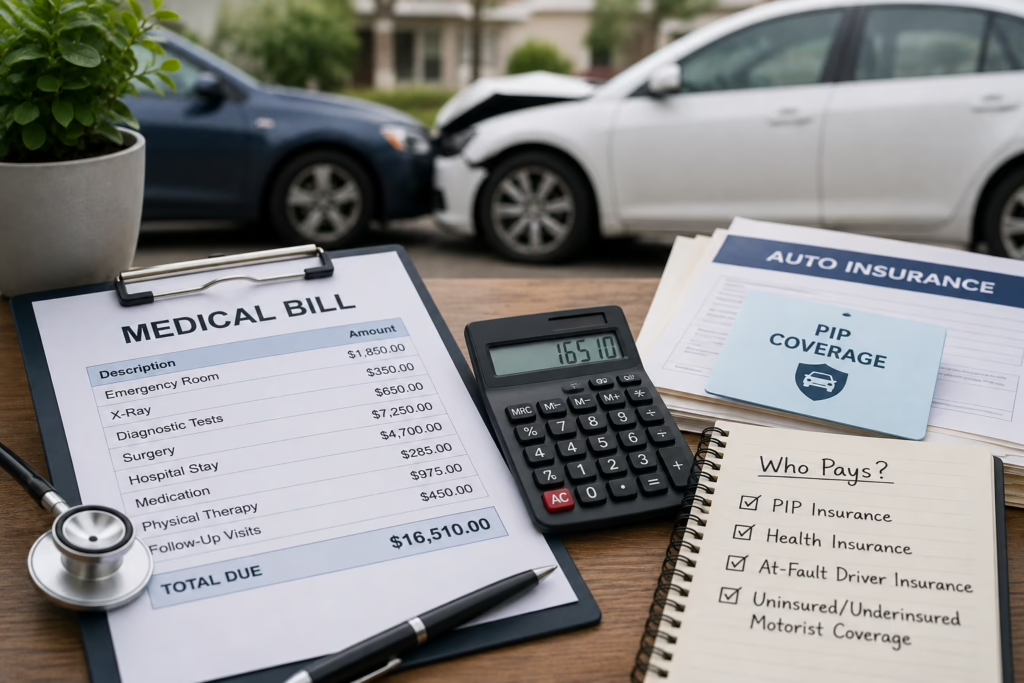
If you were injured in a collision, you may start receiving medical bills before you have recovered—or before the insurance companies have even decided who was responsible for the crash. That leaves many injured people asking the same question: Who pays Washington car accident medical bills?
The answer depends on your insurance coverage and the circumstances of the collision. Personal Injury Protection (PIP) may pay qualifying medical expenses first. Health insurance may also cover treatment. If another driver caused the crash, you may ultimately pursue compensation from that driver’s liability insurance.
The important thing to understand is that who pays a medical bill initially is not necessarily the same as who is ultimately financially responsible for your injuries.
Who Pays Washington Car Accident Medical Bills First?
A common misconception is that the at-fault driver’s insurance company will immediately start paying an injured person’s hospital and doctor bills.
In practice, a bodily injury liability claim can take time. The insurance company may investigate how the accident occurred, whether its insured was responsible, whether the treatment was related to the collision, and the extent of the injured person’s damages.
Meanwhile, medical providers still expect to be paid.
Depending on the coverage available, PIP or health insurance may therefore pay some medical expenses while the claim against the responsible driver remains pending.
How Does PIP Pay Medical Bills in Washington?
Personal Injury Protection is optional automobile insurance coverage that can provide benefits following an accident without requiring you to first establish that another driver was at fault.
Washington insurers issuing applicable automobile liability policies must offer PIP coverage. However, the named insured can reject that coverage in writing.
That means you should check your actual policy rather than assuming you either have or do not have PIP.
How Much Medical Coverage Does PIP Provide?
Washington’s statutory minimum PIP offering includes $10,000 in medical and hospital benefits.
Under Washington law, PIP medical and hospital benefits cover reasonable and necessary expenses for qualifying accident-related healthcare services. The statutory definition includes certain healthcare services, pharmaceuticals, prosthetic devices, eyeglasses, ambulance services, hospital services, and professional nursing services.
Medical and hospital benefits under the statute apply to qualifying expenses incurred within three years of the automobile accident.
Your specific policy and circumstances will determine what benefits are actually available.
Can Health Insurance Pay After a Car Accident?
Yes. Health insurance can also be an important source of payment for accident-related treatment.
Depending on your plan and other available insurance, health insurance may cover qualifying care subject to deductibles, copays, coinsurance, network requirements, and other policy terms.
However, using health insurance does not necessarily eliminate a claim against the person who caused the accident.
If another driver’s negligence caused your injuries, you may still be able to pursue compensation for legally recoverable damages.
There is another issue to consider: an insurer or benefit plan that pays accident-related medical expenses may have reimbursement or subrogation rights. Those issues can affect how much money you ultimately receive from a settlement.
Does the At-Fault Driver Pay Your Medical Bills?
Potentially, but usually as part of the resolution of a bodily injury claim rather than by paying each medical provider as bills arrive.
If another driver’s negligence caused the accident, a claim may be made against the applicable liability insurance policy.
Medical expenses can be one component of the damages sought in that claim. Depending on the circumstances, other damages may include:
- Lost wages
- Reduced earning capacity
- Property damage
- Pain and suffering
- Other accident-related losses
The amount that can actually be recovered depends on liability, causation, damages, available insurance coverage, and other facts specific to the case.
What If the At-Fault Driver Does Not Have Enough Insurance?
A serious injury can quickly create expenses that exceed another driver’s available liability insurance.
If the responsible driver is uninsured or does not have enough coverage, uninsured/underinsured motorist coverage (UM/UIM) may become important.
Whether UM/UIM coverage applies depends on the policies and facts involved. An attorney can review the available insurance policies to identify potential sources of compensation instead of assuming the other driver’s insurer is the only option.
What If You Were Partially Responsible for the Accident?
Washington’s comparative-fault law means partial responsibility does not necessarily prevent an injured person from recovering compensation.
Under RCW 4.22.005, fault attributed to the injured claimant proportionately reduces the compensatory damages awarded rather than automatically barring recovery.
For example, if the total compensatory damages were determined to be $100,000 and the injured person were found 20% at fault, that allocation of fault could reduce the award accordingly.
This makes disputes over fault particularly important in Washington car accident cases.
What Medical Expenses Should You Document?
Keep records of medical treatment and expenses connected with the collision. Depending on your injuries, these may include:
- Ambulance bills
- Emergency room treatment
- Hospital bills
- Diagnostic imaging
- Doctor appointments
- Specialist treatment
- Surgery
- Physical therapy
- Chiropractic treatment
- Prescription medications
- Rehabilitation
- Future medical treatment
Also keep insurance explanations of benefits, receipts, correspondence with insurance companies, and documentation showing time missed from work.
Good records can make it easier to establish what the collision actually cost you.
Should You Accept an Early Insurance Settlement?
Be cautious.
An insurance company may make a settlement offer while you are still receiving medical treatment. Accepting money quickly can be tempting when bills and lost wages are creating financial pressure.
But an early offer may not account for the full extent of your injuries.
Before resolving a claim, consider whether you understand your diagnosis, future treatment needs, total medical expenses, lost income, available insurance limits, and any reimbursement or lien issues.
A final settlement ordinarily involves releasing claims against the responsible parties covered by the release. That can make accepting a settlement before understanding your injuries a significant decision.
How Long Do You Have to File a Washington Car Accident Claim?
Washington generally imposes a three-year statute of limitations on actions for injury to a person or property under RCW 4.16.080.
That does not mean every accident-related legal claim has exactly the same deadline. Exceptions and different requirements can apply depending on the circumstances and parties involved.
Waiting can also hurt a case even before a legal deadline expires. Evidence can disappear, witnesses can become difficult to locate, and records can become harder to obtain.
When Should You Talk to a Washington Car Accident Lawyer?
You should consider obtaining legal advice when an accident involves significant injuries, substantial medical expenses, missed work, disputed liability, inadequate insurance, or pressure from an insurance company to settle.
An attorney can investigate the collision, determine what insurance coverage may apply, collect medical and financial evidence, address insurance reimbursement issues, and evaluate the potential value of the claim.
Getting advice before signing a settlement or release can be particularly important.
Get Help With Washington Car Accident Medical Bills
You should be able to focus on recovering from your injuries rather than trying to determine which insurance company should pay each bill.
If you were injured because of another driver’s negligence, Blanford Law can review the accident, available insurance coverage, medical expenses, and potential sources of compensation.
Contact Blanford Law today at ken@blanfordlaw.com or 253-720-9304 for guidance on your legal matter.
Additional Resources
New Year’s Legal Resolution: Check Your Car Insurance Coverage in Washington
Learn how PIP and uninsured/underinsured motorist coverage can provide important financial protection after a Washington car accident.
Washington Car Accident Steps – What to Do Legally After a Crash
Review important steps to take following a collision, including obtaining medical care, documenting the accident, notifying insurers, and protecting your legal rights.
Distracted Driving Accident Lawyer — Legal Help in Washington State
Learn about your options for pursuing compensation when a distracted driver’s negligence causes injuries, medical expenses, and other losses.
Pierce County Jail Roster
Learn how to locate someone in the Pierce County Jail and review available booking, custody, and case-related information.
How Do I Look Someone Up in the Pierce County Jail?
Find information about locating someone who may have been booked into the Pierce County Jail and where to check available custody information.