
Introduction
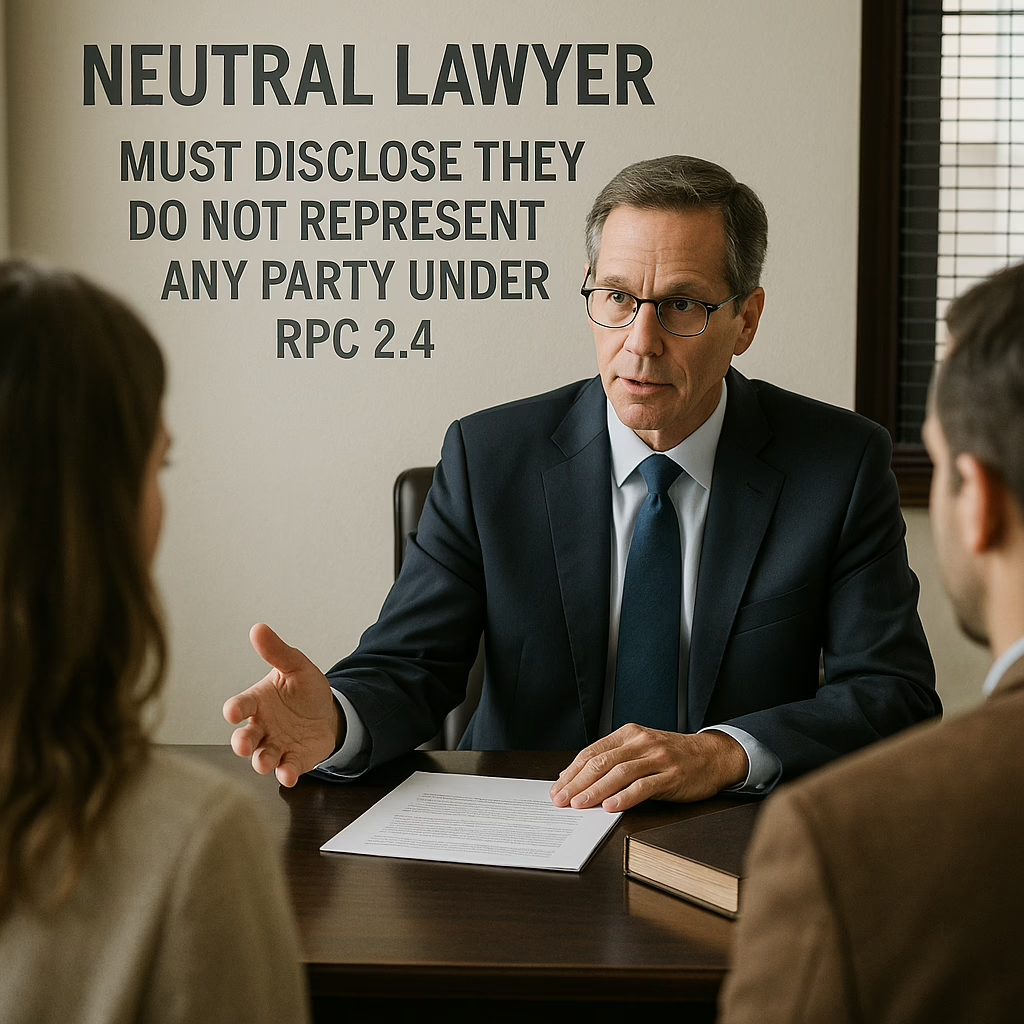
In many legal matters, attorneys act not as advocates, but as neutral facilitators — a role formally recognized under Washington’s Rules of Professional Conduct (RPC) 2.4. When a Washington lawyer serves as a third-party neutral, they are not representing any of the parties involved. Instead, they may mediate, arbitrate, or facilitate discussions without allegiance to one side.
RPC 2.4 outlines the ethical responsibilities Washington attorneys must follow in these neutral roles, especially when parties may mistakenly assume the lawyer is representing them. This article explores the rule’s key requirements, practical implications, and what both lawyers and the public should understand about these roles.
What Is a Third-Party Neutral?
A third-party neutral is a lawyer assisting two or more persons in resolving a dispute or issue, but without representing any of them as a client. Common roles include:
- Mediators
- Arbitrators
- Settlement facilitators
- Neutral evaluators
In each case, the lawyer helps the parties move toward resolution, but does not advocate for one side over another. This non-representative position carries unique ethical obligations.
Core Requirements of RPC 2.4
Under Washington RPC 2.4 (courts.wa.gov), a lawyer acting as a third-party neutral must:
1. Clearly Communicate the Role
The lawyer must inform unrepresented parties that they are not acting as the party’s attorney. This helps prevent confusion about whether the lawyer will give legal advice or advocate for a party’s interests.
2. Correct Misunderstandings About Representation
If a party misunderstands the lawyer’s role and believes the lawyer is representing them, the lawyer must clarify the nature of the relationship — and correct the misunderstanding.
This disclosure requirement is critical when at least one of the parties is not represented by their own attorney.
Why RPC 2.4 Matters
The rule serves two primary purposes:
- Protecting the Integrity of the Legal Process
If parties believe the neutral lawyer is “on their side,” it can distort the fairness and outcome of the process. RPC 2.4 helps maintain neutrality and trust. - Preventing Unauthorized Legal Advice
A neutral lawyer may help facilitate discussions, but should not give legal advice to unrepresented parties. Without a clear boundary, the lawyer could unintentionally create an attorney-client relationship — or violate rules on unauthorized practice.
Practical Implications for Washington Lawyers
Lawyers serving as third-party neutrals in Washington must take proactive steps:
- Use written disclosures or forms stating that they do not represent any party.
- Be especially clear when interacting with unrepresented parties.
- If any party begins treating the neutral as “their lawyer,” the lawyer should restate the neutral role and may need to encourage the party to seek independent counsel.
- Avoid offering legal advice or predictions that could be mistaken for advocacy.
Client Takeaway: Know the Role of the Neutral
If you’re working with a lawyer in a mediation or arbitration setting:
- Don’t assume the lawyer represents you — ask about their role.
- If the lawyer says they are a “neutral,” they are not advocating for you.
- You may still need to hire your own attorney to get advice or protect your interests.
- It’s appropriate to ask the neutral to explain their role and what they can or cannot do.
Conclusion & Call to Action
RPC 2.4 protects clients, lawyers, and the legal system by making sure everyone understands the role of a third-party neutral. Whether you’re an attorney or an unrepresented party, it’s critical to understand that a neutral lawyer is not your advocate — and cannot give you legal advice.
If you’re facing a dispute resolution process and want to ensure your rights are protected, contact Blanford Law today at ken@blanfordlaw.com or 253‑720‑9304 for experienced guidance.
Additional Resources
- State v. Stephenson: Jury Unanimity in Washington Criminal Cases
This case explores when jury unanimity is required for multiple acts charged under a single count.
https://blanfordlaw.com/state-v-stephenson-jury-unanimity/ - WAC 308-19-220: Bail Bond Agent Reporting Requirements
Understand the mandatory reporting duties for Washington bail bond agents under WAC 308-19-220.
https://blanfordlaw.com/bail-bond-agents-wac-308-19-220/ - Rollover Accident on I-82: Legal and Safety Considerations
Covers the legal issues and potential liability involved in a serious rollover crash on Interstate 82.
https://blanfordlaw.com/rollover-accident-i-82/ - State v. Olivera-Avila: Collateral Attacks on Guilty Pleas
This case highlights when a guilty plea may be challenged in Washington through a collateral attack.
https://blanfordlaw.com/state-v-olivera-avila-understanding-washington-law-on-collateral-attacks-and-guilty-pleasolivera-avila-washington-case/ - Christmas Lights on Cars — What WAC 204-21-230 Prohibits
Explains why decorative vehicle lights, including Christmas lights, are not legal while driving in Washington.
https://blanfordlaw.com/christmas-lights-on-cars-washington/