
Being charged with a Washington physical control DUI can be confusing because you do not actually have to be driving to face criminal penalties. Under Washington law, a person may be arrested for being in “physical control” of a vehicle while under the influence of alcohol or drugs, even if the vehicle is parked.
Understanding how Washington courts interpret physical control cases is important because these charges can carry serious consequences, including license suspension, fines, ignition interlock requirements, and jail time.
What Is a Washington Physical Control DUI?
Under RCW 46.61.504, a person can be charged if they are in physical control of a motor vehicle while under the influence of intoxicating liquor, cannabis, or other drugs.
Unlike a traditional DUI, prosecutors do not need to prove that you were actively driving. Instead, the state only needs to show that you had the ability to operate or control the vehicle while impaired.
For example, law enforcement may make an arrest if someone is:
- Sitting in the driver’s seat with the keys nearby
- Sleeping inside a parked car
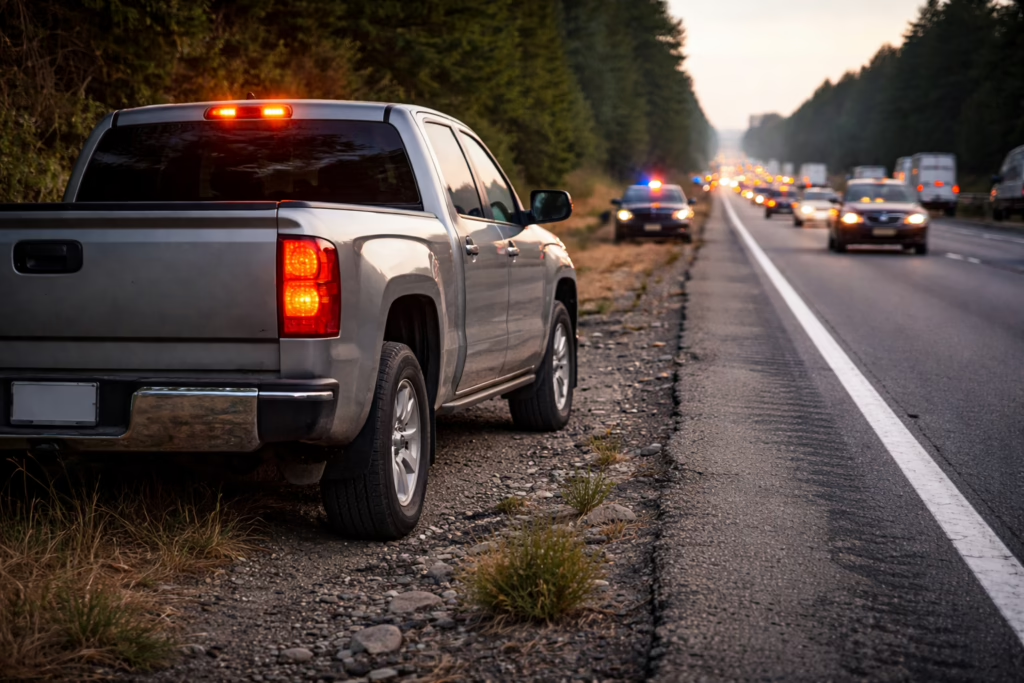
- Parked on the roadside while intoxicated
- Found inside a running vehicle
- Attempting to move the vehicle while impaired
Washington courts often look at the total circumstances when deciding whether someone was in actual physical control of a vehicle.
How Washington Courts Define Physical Control
A physical control charge depends heavily on the facts of the case. Courts evaluate whether the individual had the present ability to operate the vehicle, even if the vehicle was not moving.
Some factors that may be considered include:
Location of the Keys
If the keys are in the ignition, within reach, or in the person’s possession, prosecutors may argue the person could immediately operate the vehicle.
Whether the Vehicle Was Running
A running engine may strengthen the state’s argument that the person intended to drive or had control over the vehicle.
Where the Vehicle Was Parked
A car parked in a roadway or unsafe location may create additional concerns for prosecutors and law enforcement officers.
Position of the Person Inside the Vehicle
Someone sitting behind the wheel may face greater scrutiny than a passenger sleeping in the back seat.
Every case is unique, and no single factor automatically determines guilt.
The Safely Off the Roadway Defense
Washington law recognizes a specific defense for individuals who safely remove themselves from the roadway before being contacted by police.
A person may avoid conviction if they can prove they had safely moved the vehicle completely off the traveled portion of the road before law enforcement arrived.
This defense often arises when someone realizes they are too impaired to drive and decides to pull over to avoid creating a danger.
However, the defense is not automatic. Courts still analyze whether the vehicle was truly in a safe location and whether the person remained capable of operating it.
Penalties for a Physical Control Conviction
The penalties for this type of DUI-related offense are similar to standard DUI penalties in Washington State.
Potential consequences may include:
- Jail time
- Significant fines and court costs
- Driver’s license suspension
- Ignition interlock device requirements
- Mandatory alcohol or drug treatment
- Probation conditions
Penalties often increase if the person has prior DUI or physical control convictions within the statutory lookback period.
A conviction may also affect employment opportunities, professional licenses, insurance rates, and background checks.
Can You Beat a Physical Control Charge?
Yes. Several defenses may apply depending on the circumstances.
Possible defenses include:
Lack of Physical Control
The defense may argue the accused did not actually have the ability to operate the vehicle.
Improper Police Stop
If law enforcement lacked legal justification to contact or detain the individual, evidence may be suppressed.
Challenging Breath or Blood Test Results
Testing procedures must comply with Washington law and administrative regulations.
Safely Off the Roadway Defense
Evidence showing the person voluntarily removed themselves from danger before police contact may support dismissal or acquittal.
An experienced DUI defense attorney can evaluate police reports, body camera footage, toxicology evidence, and witness statements to determine the strongest strategy.
Why Legal Representation Matters
Physical control allegations are highly fact-specific. Even though prosecutors do not need to prove actual driving, they still must establish impairment and control beyond a reasonable doubt.
Early legal intervention may help:
- Challenge unlawful police conduct
- Preserve favorable evidence
- Negotiate reduced charges
- Minimize license consequences
- Protect your criminal record
Because Washington DUI laws are complex, it is important to work with an attorney familiar with local courts and DUI procedures.
Additional Resources
- DUI vs. Physical Control in Washington
Understand the key differences between DUI and physical control charges and how each is prosecuted under Washington law.
https://blanfordlaw.com/dui-vs-physical-control-washington/ - Washington DUI Physical Control: State v. Reid
This case analysis explores how Washington courts interpret physical control and the limits of the defense.
https://blanfordlaw.com/washington-dui-physical-control-reid/ - DUI Physical Control Washington | Blanford Law
A comprehensive overview of physical control charges, defenses, and legal strategies in Washington State.
https://blanfordlaw.com/dui-physical-control-washington-blanford-law/ - Washington DUI Safely Off the Roadway: Lively
Learn how courts analyze whether a driver was safely off the roadway in DUI-related cases.
https://blanfordlaw.com/washington-dui-safely-off-the-roadway-lively/ - Washington DUI Safely Off Roadway: Neill
This article examines another key case interpreting the safely off the roadway defense in Washington.
https://blanfordlaw.com/washington-dui-safely-off-roadway-neill/