
Lawyers frequently interact with individuals who do not have legal representation. Whether negotiating a settlement, discussing a contract, or communicating during litigation, attorneys must carefully balance their duty to advocate for their clients with their ethical obligations toward unrepresented persons. Washington RPC 4.3 establishes clear rules designed to prevent confusion, protect unrepresented individuals, and preserve the integrity of the legal profession.
Unlike RPC 4.2, which governs communications with represented persons, RPC 4.3 applies when the opposing party or another person involved in the matter does not have an attorney.
What Is Washington RPC 4.3?
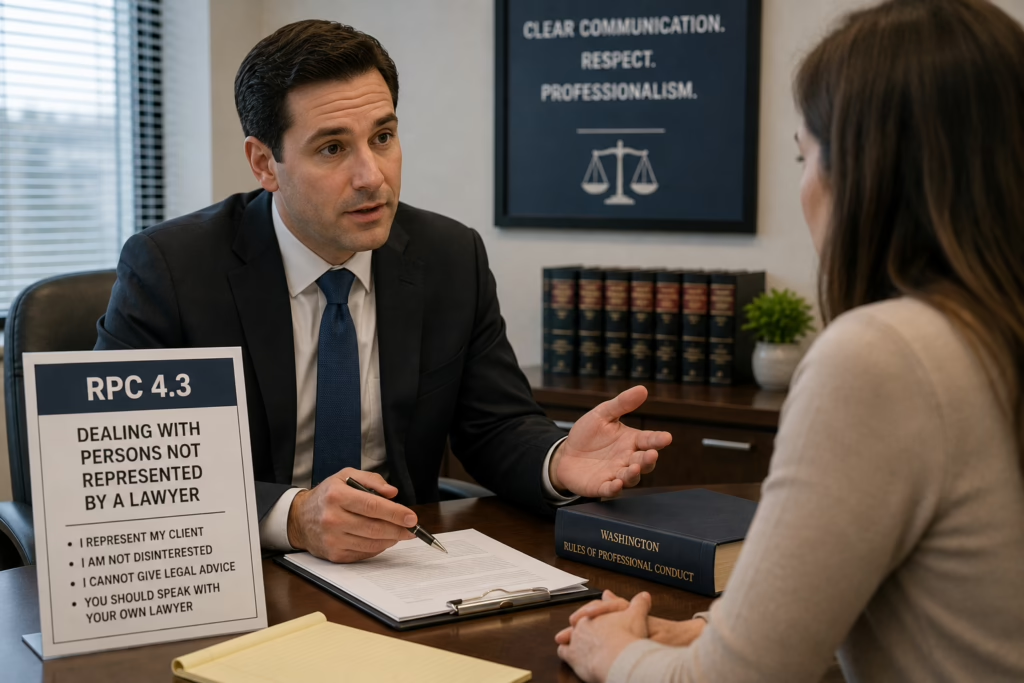
Washington Rule of Professional Conduct 4.3 provides that when dealing with an unrepresented person on behalf of a client, a lawyer:
- Must not state or imply that the lawyer is disinterested.
- Must correct any misunderstanding about the lawyer’s role if the unrepresented person mistakenly believes the lawyer is neutral.
- Must not give legal advice to an unrepresented person whose interests conflict—or reasonably may conflict—with those of the lawyer’s client, except to advise that person to obtain independent legal counsel.
The rule promotes honesty while protecting individuals who may not fully understand the legal process.
Lawyers Must Clearly Identify Their Role
One of the most important requirements of Washington RPC 4.3 is transparency.
Many people assume that because an attorney understands the law, the attorney is offering neutral guidance. Comment 1 recognizes that this misunderstanding is common, especially among individuals unfamiliar with legal proceedings.
To avoid confusion, lawyers should clearly explain:
- Whom they represent.
- That they do not represent the unrepresented individual.
- That their client’s interests may be adverse to the other person’s interests.
Making these points early helps prevent misunderstandings and protects everyone involved.
Lawyers Cannot Pretend to Be Neutral
A lawyer representing one side of a dispute cannot imply that they are acting as a neutral advisor or independent legal authority.
For example, an attorney should not suggest:
- “I’m just trying to help both of us.”
- “I’m looking out for everyone’s interests.”
- “You don’t really need your own attorney.”
Even if well-intentioned, statements like these may create the false impression that the lawyer is providing impartial guidance.
Washington RPC 4.3 and Legal Advice
When Lawyers Must Avoid Giving Legal Advice
Comment 2 distinguishes between explaining a client’s position and providing legal advice.
If the unrepresented person’s interests conflict with the lawyer’s client, the attorney generally may not advise the person about:
- Their legal rights.
- Whether they should accept a settlement.
- The legal consequences of signing an agreement.
- Whether a proposed contract is in their best interests.
Instead, the lawyer should advise the individual to seek independent legal counsel.
This protects the unrepresented person from relying on advice provided by someone whose duty is to advocate for an opposing party.
What Lawyers May Do
Although lawyers cannot provide legal advice to an adverse unrepresented person, RPC 4.3 does not prohibit ordinary negotiations.
Attorneys may:
- Negotiate settlement terms.
- Present settlement offers.
- Explain their client’s position.
- Prepare agreements for signature.
- Explain what a document says from their client’s perspective.
The key distinction is that the lawyer cannot advise the unrepresented person regarding what they should do or what decision would best serve that person’s interests.
Correcting Misunderstandings
Lawyers also have an affirmative duty to correct misunderstandings.
If an unrepresented individual mistakenly believes that the attorney represents both sides or is serving as a neutral advisor, the lawyer must make reasonable efforts to correct that misunderstanding.
Failure to do so could violate RPC 4.3 even if the misunderstanding was unintentional.
Limited Scope Representation
Washington recognizes limited scope legal representation under RPC 1.2(c).
Comment 3 explains that a person receiving limited legal services is generally treated as unrepresented unless opposing counsel has received written notice that communications regarding specified matters must go through the limited representation attorney.
Attorneys should always verify whether limited representation applies before communicating directly.
Government Lawyers and Public Information
Government attorneys frequently interact with members of the public who are not represented by counsel.
Comment 4 explains that government lawyers may provide general information regarding:
- Government procedures.
- Filing requirements.
- Administrative processes.
- Applicable laws.
Providing general legal information does not violate RPC 4.3 so long as the attorney does not create an attorney-client relationship or provide legal advice to an adverse unrepresented person.
Persons Assisted by Legal Technicians
Washington’s comments also address individuals assisted by a Limited License Legal Technician (LLLT).
Although Washington has since sunset the LLLT program, the comments explain that a person assisted by an LLLT is considered unrepresented for purposes of RPC 4.3. Lawyers communicating with such individuals should still avoid overreaching and respect applicable privilege and confidentiality protections.
Practical Examples
Washington RPC 4.3 commonly applies during:
- Personal injury settlement negotiations.
- Debt collection matters.
- Real estate transactions.
- Contract negotiations.
- Business disputes.
- Probate matters.
- Administrative proceedings.
In each situation, lawyers must balance effective advocacy with ethical communication.
Why Washington RPC 4.3 Matters
Many individuals encounter the legal system without hiring an attorney. Washington RPC 4.3 helps ensure that those individuals are treated fairly while allowing lawyers to advocate vigorously for their clients.
The rule promotes transparency by requiring lawyers to identify whom they represent, correct misunderstandings, and refrain from giving legal advice to adverse unrepresented persons. These safeguards preserve public confidence in the legal profession while reducing the risk that individuals will unknowingly rely on advice from opposing counsel.
Contact Blanford Law
If you have questions about Washington legal ethics, attorney communications, or the Rules of Professional Conduct, contact Blanford Law today at ken@blanfordlaw.com or 253-720-9304 for guidance on your legal matter.
Additional Resources
- Washington Lawyer as Third-Party Neutral – Learn when a Washington attorney may serve as a mediator, arbitrator, or other neutral and the ethical responsibilities that accompany that role.
- RPC 2.1 – Lawyer as Advisor – Explore a lawyer’s duty to provide candid, independent legal advice that considers both legal and practical factors affecting a client’s decisions.
- Washington Lawyer Advisor Duty – Discover how Washington attorneys fulfill their professional obligation to provide objective guidance while advocating for their clients’ best interests.
- Washington RPC 3.3 – Candor Toward the Tribunal – Understand the ethical requirement that lawyers be truthful with courts and tribunals and avoid making false statements or presenting misleading evidence.