
Understanding Washington’s Bail Recording Requirement (RCW 10.19.060)
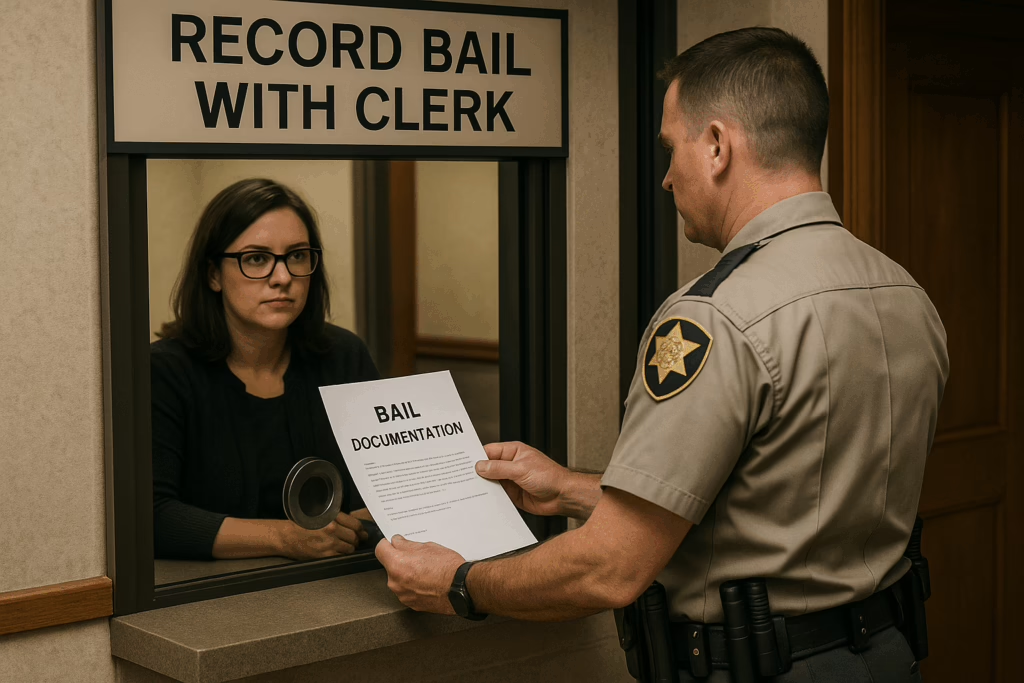
When someone is arrested in Washington state, law enforcement must follow specific steps before and after setting bail. One of these steps, mandated by RCW 10.19.060, is that officers must record bail with the clerk of the court. Proper recording protects a defendant’s rights, promotes transparency, and ensures accurate legal records.
In this article, we explain what the statute requires, why it matters, and how the bail recording process works. If you or a loved one is navigating the criminal justice system, understanding this requirement can help you avoid unnecessary detention and ensure proper legal procedure.
What Does “Record Bail with Clerk” Mean?
The phrase record bail with clerk means that after an officer accepts or sets bail, they must document it with the clerk’s office of the appropriate court. This includes entering essential details into the official court records, such as:
- The amount of bail
- Any conditions attached to the bail
- The time and method by which bail was posted
- The identity of the defendant
This requirement ensures the court’s records accurately reflect the defendant’s status and prevents disputes over whether bail was properly handled.
Why RCW 10.19.060 Matters
Recording bail with the court clerk isn’t just paperwork — it’s a legal safeguard with real consequences:
Protects a Defendant’s Rights
If bail isn’t properly recorded, a defendant could remain in custody longer than necessary. This might justify legal challenges, especially if wrongful or extended detention occurs due to clerical errors or omissions.
Supports Accurate Court Records
Court clerks maintain the official register of actions in criminal cases. Accurate bail records help judges, prosecutors, defense attorneys, and law enforcement coordinate pretrial release, court appearances, and monitoring conditions.
Reduces Legal Disputes
Clear, documented bail records make it harder for opposing parties to argue over whether bail was set, posted, or recorded, which can matter in bail hearings, appeals, or motions to dismiss.
How Law Enforcement Records Bail
The process for bail recording can vary slightly by jurisdiction, but generally includes the following steps:
- Bail is Set or Accepted
After an arrest, the officer either sets bail according to statute or accepts bail that has already been determined. - Documentation is Prepared
Officers complete the required paperwork reflecting the bail amount, conditions, and other details. - Submission to Clerk’s Office
Documentation is submitted to the clerk either electronically, in person, or via official transmission—depending on local court procedures. - Clerk Enters Bail into Official Record
Once received, the clerk’s office enters bail information into the court’s register, making it part of the public and legal record.
This process ensures compliance with Washington law and gives all parties access to accurate pretrial release information.
Review our client resources here
Contact us anytime for your urgent legal needs.
About Blanford Law:
We are no-nonsense, relentless, fair, and honest. We are great listeners instead of fast talkers, that is just who we are. More than 20 years ago, Ken began practicing law with a deeply-seeded belief that every person has the right to the best legal representation available. He built his law firm on that belief. Another belief that he strongly adheres to is his fundamental belief that clients deserve respect, with no assumptions or preconceived notions. If you or someone you know is accused of a crime or injured as a result of the negligence of another, please have them call us at 253-720-9304 or email us info@blanfordlaw.com
Additional Resources
Childhood Abuse Statute of Limitations in Washington
Understand how Washington’s statute of limitations for childhood abuse has changed and what it means for survivors seeking justice.
Childhood Abuse Protections Expanded by Washington Supreme Court
Learn how a recent Washington Supreme Court ruling expanded legal protections and rights for survivors of childhood sexual abuse.
Island County Fatal Car Accidents: What Victims’ Families Should Know
A helpful overview of legal steps families can take after a fatal car accident in Island County, including wrongful death claims.
Cash Bail Forfeiture in Washington: What You Need to Know
Explore how cash bail forfeiture works in Washington and what happens when someone fails to appear in court after posting bail.
RCW 10.19.060: Recording Bail with the Clerk
Discover your rights under RCW 10.19.060 and what happens when law enforcement fails to record bail properly with the court clerk.