
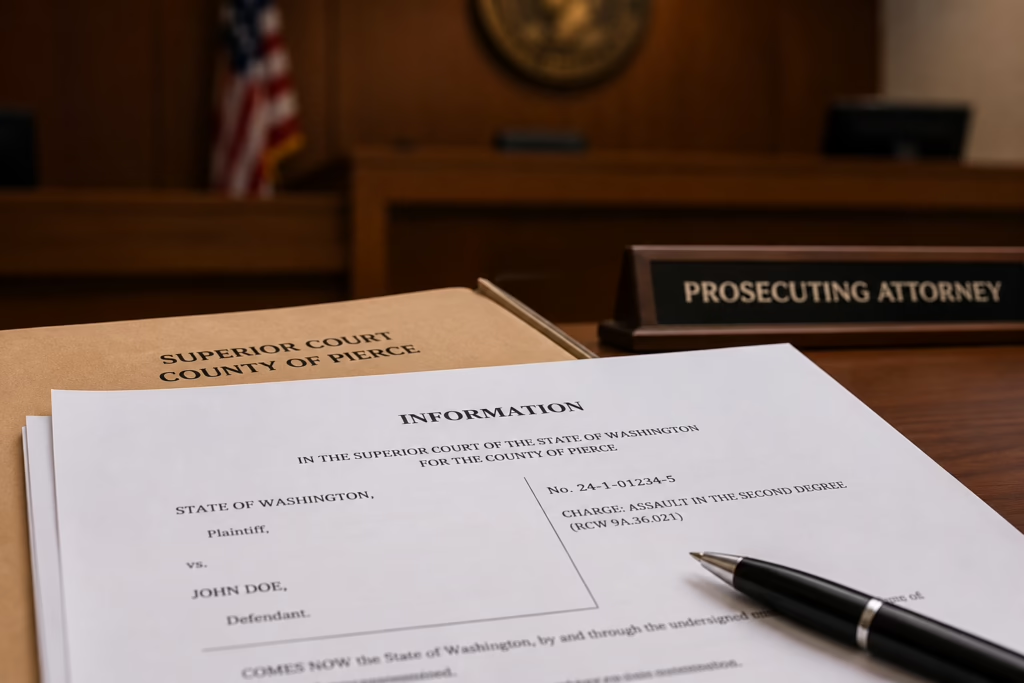
When someone is charged with a crime in Washington State, the prosecution must begin the case by filing a formal charging document. Washington CrR 2.1 establishes the rules governing these charging documents, known as an indictment or an information. This rule ensures that criminal defendants receive adequate notice of the charges against them while allowing prosecutors to properly initiate criminal proceedings.
Understanding how CrR 2.1 works can help defendants recognize whether criminal charges comply with Washington law and what options may be available if they do not.
What Is Washington CrR 2.1?
Washington CrR 2.1 governs the contents and use of indictments and informations in Washington criminal courts.
In Washington, the vast majority of criminal cases begin with an information filed by the prosecuting attorney. An indictment, which is issued by a grand jury, is far less common because Washington rarely uses grand juries in state criminal prosecutions.
Regardless of which document is used, CrR 2.1 requires the charging document to provide enough factual information so the defendant understands the allegations and can prepare a defense.
What Must an Information or Indictment Include?
Under CrR 2.1(a), the charging document must contain:
- A plain, concise, and definite written statement of the essential facts constituting the offense.
- The prosecuting attorney’s signature.
- The statutory citation identifying the law allegedly violated.
- Separate counts for each alleged offense when multiple charges are filed.
The rule also permits prosecutors to:
- Incorporate allegations from one count into another.
- Allege that the precise manner of committing the offense is unknown.
- Charge that the offense occurred by one or more specified means.
Importantly, a simple error in citing the statute will not automatically result in dismissal if the mistake did not prejudice the defendant.
Required Defendant Information
Personal Identification
CrR 2.1 also requires the charging document to contain or include identifying information such as:
- Defendant’s name
- Address
- Date of birth
- Sex
Identification Numbers
When available, prosecutors must include known identification numbers, including:
- Washington driver’s license (DOL)
- State Identification Number (SID)
- Criminal Process Number (PCN)
- JUVIS number
- Department of Corrections (DOC) number
These identifiers help ensure that court records accurately correspond to the correct individual.
Can Extra Language Be Removed?
Surplusage Under CrR 2.1(b)
Sometimes a charging document contains allegations that are unnecessary or potentially prejudicial.
CrR 2.1(b) allows the defendant to ask the court to strike surplusage, meaning language that is not necessary to establish the charged offense.
Although courts do not grant every motion to strike, removing inflammatory or irrelevant language can help ensure a fair trial.
What Is a Bill of Particulars?
Obtaining More Specific Information
If the charging document is too vague, the defendant may request a bill of particulars under CrR 2.1(c).
A bill of particulars requires the prosecution to provide additional details about the allegations so the defendant can adequately prepare a defense.
Generally, the motion must be filed:
- Before arraignment;
- Within ten days after arraignment; or
- Later if the court permits.
Bills of particulars are especially important when the information alleges criminal conduct in broad or general terms.
Can Criminal Charges Be Amended?
Amendments Before Trial
CrR 2.1(d) allows the court to permit amendments to an information or bill of particulars before a verdict is reached.
However, amendments are only allowed if they do not prejudice the substantial rights of the defendant.
For example, courts may permit:
- Correcting clerical mistakes.
- Clarifying factual allegations.
- Updating statutory citations.
By contrast, last-minute amendments that fundamentally change the nature of the charges may violate a defendant’s constitutional right to notice and an opportunity to prepare a defense.
Washington appellate courts have repeatedly emphasized that defendants cannot be unfairly surprised by significant changes immediately before or during trial.
Defendant’s Criminal History
Why Prosecutors Request Criminal History
When a felony information is filed, CrR 2.1(e) requires prosecutors to request the defendant’s criminal history from the Washington State Patrol.
This criminal history may later be used:
- During plea negotiations.
- At sentencing.
- To calculate an offender score under Washington’s Sentencing Reform Act.
The rule helps ensure that accurate criminal history information is available if the case proceeds to sentencing or a plea agreement.
Why Washington CrR 2.1 Matters
Although CrR 2.1 appears procedural, it protects several important constitutional rights.
A properly drafted charging document:
- Gives the defendant notice of the allegations.
- Allows meaningful preparation of a defense.
- Prevents unfair surprise at trial.
- Creates a clear record for appellate review.
If an information omits essential elements of the offense or otherwise fails to satisfy constitutional requirements, dismissal or other remedies may be available.
Because these issues often involve complex legal analysis, defendants should have an experienced criminal defense attorney review the charging documents as early as possible.
Contact Blanford Law
If you have been charged with a crime in Washington, the charging document may significantly affect your defense strategy. An experienced attorney can review whether the information complies with Washington CrR 2.1, identify potential defects, and protect your constitutional rights throughout the criminal process.
Contact Blanford Law today at ken@blanfordlaw.com or 253-720-9304 for guidance on your legal matter.
Additional Resources
Your Rights Under RCW 9.98.010 in Washington
Washington law provides important rights for individuals involved in the criminal justice system, including access to information and procedural protections throughout a criminal case.
https://blanfordlaw.com/rcw-9-98-010-rights-washington/
Washington CrR 8.3(b): When Criminal Charges Can Be Dismissed
Learn how CrR 8.3(b) allows Washington courts to dismiss criminal cases when governmental misconduct prejudices a defendant’s right to a fair trial.
https://blanfordlaw.com/washington-crr-83b-dismissal-case/
Single Photo Identification in Washington Criminal Cases
Explore how Washington courts evaluate the reliability of single-photo identifications and when suggestive identification procedures may violate a defendant’s constitutional rights.
https://blanfordlaw.com/single-photo-identification-washington/
Washington CrR 1.2: The Purpose of the Criminal Rules
Read about the guiding principles behind Washington’s Criminal Rules and how they are intended to ensure fairness, simplicity, and the just determination of every criminal proceeding.
https://blanfordlaw.com/washington-crr-1-2/