
IRLJ 3.5: How Written Traffic Infraction Hearings Work in Washington State
Washington drivers who receive a traffic infraction often assume they must personally appear in court to contest the ticket or explain mitigating circumstances. However, under IRLJ 3.5 written statements, many traffic infraction hearings can be resolved entirely through written submissions.
IRLJ 3.5 is part of Washington’s Infraction Rules for Courts of Limited Jurisdiction. The rule establishes procedures allowing defendants to submit written statements rather than appearing in person for certain hearings. This process can save time, reduce court congestion, and make it easier for individuals to participate in the legal process.
The rule was amended several times over the years, including significant updates effective July 9, 2024. These changes expanded information courts must provide regarding inability to pay and payment plan options.
What Is IRLJ 3.5?
IRLJ 3.5 governs how Washington courts handle hearings based on written statements in traffic infraction cases. The rule applies to both:
- Contested hearings, where a driver disputes the infraction; and
- Mitigation hearings, where the driver admits the infraction but asks for reduced penalties.
Rather than attending court in person, defendants may submit written explanations and supporting documents for judicial review.
Required Court Forms Under IRLJ 3.5 Written Statements
Local Court Form Requirements
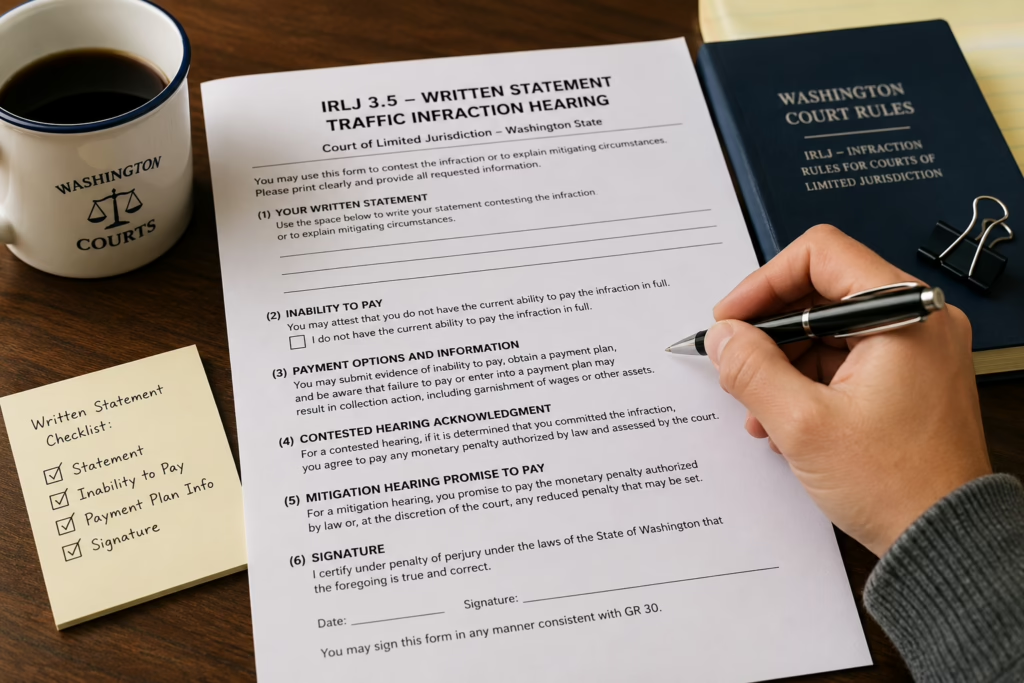
Under the rule, every court must create and publish a form defendants can use for hearings decided on written statements. Courts must make the form available on their website and provide copies upon request.
The form must include several important features:
- Space for defendants to explain their side of the case;
- Notice regarding inability to pay the infraction;
- Information about payment plans and collection consequences;
- Statements acknowledging responsibility for penalties if the court upholds the infraction; and
- Signature language compliant with Washington court rules.
The updated rule reflects Washington courts’ increasing emphasis on access to justice and financial hardship protections.
Contesting a Traffic Ticket Using Written Statements
Contested Hearing Procedures
Under IRLJ 3.5 written statements, a defendant may contest a traffic ticket by submitting a written explanation and supporting evidence to the court.
The judge reviews:
- The citing officer’s sworn report;
- The defendant’s written statement; and
- Any supporting documents submitted by either side.
The court may conduct the review privately in chambers rather than during a public hearing.
The judge must decide whether the government proved the infraction by a “preponderance of the evidence.” This standard means the court must determine whether it is more likely than not that the violation occurred.
Timing Requirements
The rule requires the court to complete its review within 120 days after the defendant files a response to the notice of infraction.
This timeline helps ensure traffic cases are resolved within a reasonable period.
Mitigation Hearings Under IRLJ 3.5
Admitting the Infraction but Requesting Leniency
A mitigation hearing differs from a contested hearing because the defendant does not dispute the violation itself. Instead, the defendant explains circumstances that may justify reducing the penalty.
For example, a driver may admit speeding but explain:
- A medical emergency;
- Financial hardship;
- A previously clean driving record; or
- Corrective actions already taken.
The court may reduce the fine at its discretion, although the judge is not required to do so.
Written Mitigation Hearings
Like contested hearings, mitigation hearings under IRLJ 3.5 may occur entirely through written submissions reviewed in chambers.
The court must also complete the mitigation review within 120 days.
Financial Hardship Protections
Ability-to-Pay Notices
One of the most important additions to the rule involves notice requirements concerning inability to pay.
Courts must now inform defendants:
- How to submit evidence of financial hardship;
- How to request payment plans; and
- That unpaid fines may result in collection actions such as wage garnishment.
These provisions recognize that traffic fines can create significant financial burdens for many Washington residents.
Payment Plan Information
The rule helps ensure defendants understand their rights regarding installment payments and alternatives to immediate full payment.
Drivers facing financial difficulties should carefully review court notices and respond promptly if payment assistance is needed.
No Appeal From Written Statement Decisions
Finality of the Court’s Decision
A particularly important part of IRLJ 3.5 is subsection (5), which states:
“There shall be no appeal from a decision on written statements.”
This means defendants who choose the written statement process generally waive the right to appeal the court’s decision.
Because written statement hearings carry this limitation, defendants should carefully consider whether they would benefit from appearing in person or consulting an attorney before proceeding.
Advantages and Disadvantages of Written Hearings
Potential Benefits
Written statement hearings may offer several advantages:
- Convenience and flexibility;
- No need to miss work or attend court;
- Reduced stress from courtroom appearances; and
- Opportunity to carefully prepare a written explanation.
Potential Risks
However, there are also disadvantages:
- No opportunity to directly question the officer;
- Limited ability to clarify misunderstandings;
- No live testimony;
- No appeal rights after the decision.
In some cases, an in-person hearing may provide strategic advantages depending on the facts involved.
Why IRLJ 3.5 Matters
The IRLJ 3.5 written statements process reflects Washington’s effort to modernize traffic infraction procedures and improve accessibility.
The rule allows courts to handle high volumes of cases efficiently while giving drivers additional options for resolving infractions. At the same time, the inability-to-pay provisions demonstrate growing recognition of the financial impact traffic fines can have on individuals and families.
Anyone facing a traffic infraction in Washington should carefully evaluate whether a written hearing or an in-person appearance is the better option based on the specific circumstances of the case.
Contact Blanford Law
Contact Blanford Law today at ken@blanfordlaw.com or 253-720-9304 for guidance on your legal matter.
Additional Resources
- IRLJ 3.5 Written Statement
Learn how Washington drivers can submit written statements instead of appearing in court for certain traffic infractions.
URL: https://blanfordlaw.com/irlj-3-5-written-statement/ - IRLJ 3.5 Written Statements
An overview of Washington’s procedures for contested and mitigation hearings decided through written submissions.
URL: https://blanfordlaw.com/irlj-3-5-written-statements/ - IRLJ 3.4 Mitigation Hearing
A guide explaining how mitigation hearings work when a driver admits the infraction but requests a reduced penalty.
URL: https://blanfordlaw.com/irlj-3-4-mitigation-hearing/ - IRLJ 2.06 Scheduling of Hearings
Understand the rules governing how Washington courts schedule traffic infraction hearings and deadlines.
URL: https://blanfordlaw.com/irlj-2-06-scheduling-of-hearings/ - IRLJ 2.06 Scheduling of Hearings
Understand the rules governing how Washington courts schedule traffic infraction hearings and deadlines.
URL: https://blanfordlaw.com/irlj-2-06-scheduling-of-hearings/ - IRLJ 3.1 Contested Hearing
Learn what to expect during a contested traffic infraction hearing in Washington State.
URL: https://blanfordlaw.com/irlj-3-1-contested-hearing/