
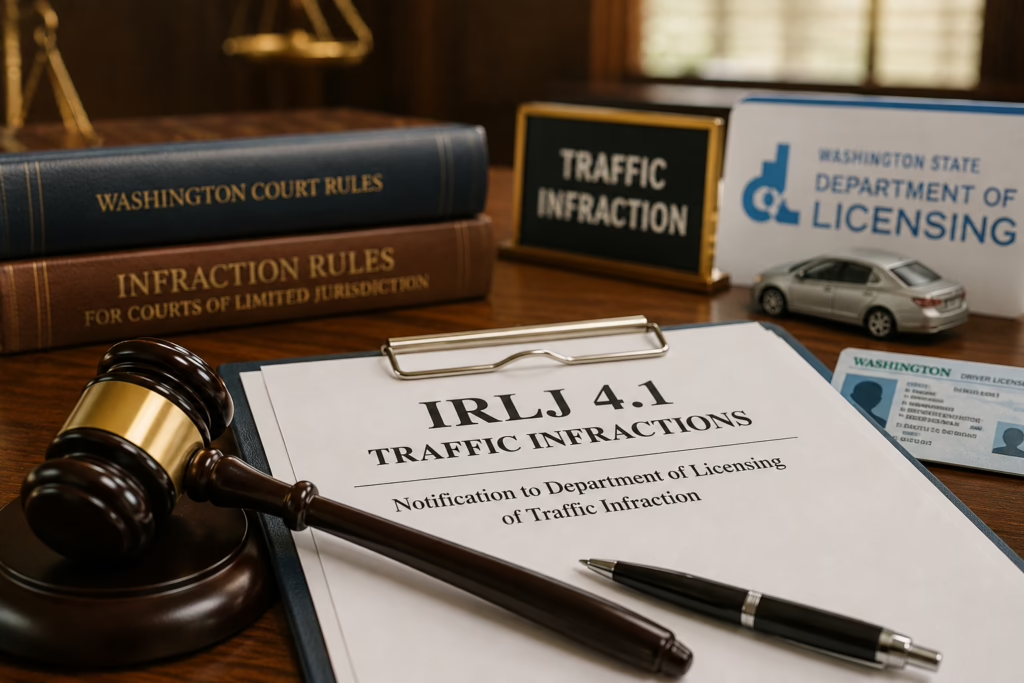
IRLJ 4.1 Traffic Infractions Rule Explained
If you receive a traffic ticket in Washington, the court’s decision may affect more than just the amount you owe. In many cases, the court must report the outcome of the case to the Washington State Department of Licensing (DOL).
IRLJ 4.1 Traffic Infractions establishes when courts must notify the Department of Licensing after a traffic infraction case is resolved. The rule also identifies situations where reporting is not required.
Understanding this rule is important because information sent to the Department of Licensing may affect your driving record and, in some cases, your driving privileges.
What Is IRLJ 4.1?
IRLJ 4.1 is part of Washington’s Infraction Rules for Courts of Limited Jurisdiction (IRLJ).
The rule governs the reporting of traffic infraction case outcomes to the Department of Licensing.
Specifically, IRLJ 4.1 explains:
- When courts must report traffic infractions.
- Which infractions are exempt from reporting.
- What happens when a failure-to-appear judgment is later set aside.
Although the rule is procedural, it plays an important role in maintaining accurate driving records throughout Washington State.
When Must a Court Notify the Department of Licensing?
Traffic Infraction Judgments
Under IRLJ 4.1(a), once a court enters judgment that a traffic infraction was committed, the court must notify the Department of Licensing.
The court generally forwards:
- A copy of the notice of traffic infraction, and
- An abstract of the court’s order.
Today, many Washington courts transmit this information electronically through systems approved by the Department of Licensing and the Administrative Office of the Courts.
As a result, updates to a driver’s record often occur quickly after the case is resolved.
Why Does Reporting Matter?
The Department of Licensing maintains driving records for Washington drivers.
When a traffic infraction is reported, it becomes part of the driver’s official record.
Depending on the violation, a reported infraction may:
- Affect insurance premiums.
- Impact commercial driver’s license holders.
- Be considered in future licensing actions.
- Influence future traffic-related proceedings.
- Appear on driving record requests.
For many drivers, the long-term consequences of a traffic ticket can be more significant than the monetary penalty.
Which Infractions Are Not Reported?
Parking, Standing, Stopping, and Pedestrian Infractions
IRLJ 4.1(b) contains an important exception.
The court generally does not notify the Department of Licensing regarding:
- Parking infractions.
- Standing violations.
- Stopping violations.
- Pedestrian infractions.
These types of violations typically do not affect a person’s driving record.
However, the rule recognizes limited exceptions authorized under RCW 46.20.270.
As a result, some circumstances may still permit reporting when specifically authorized by statute.
What Happens If a Failure-To-Appear Judgment Is Set Aside?
IRLJ 4.1 and Failure-To-Appear Judgments
Sometimes a driver fails to respond to a traffic ticket or misses a required court appearance.
When that happens, the court may enter a judgment based on the failure to appear.
IRLJ 4.1(c) addresses what occurs if that judgment is later vacated or set aside.
When a failure-to-appear judgment is removed, the court must notify the Department of Licensing that:
- The failure-to-appear judgment has been set aside, and
- The final disposition of the traffic infraction has been entered.
This requirement helps ensure that Department of Licensing records accurately reflect the actual outcome of the case.
Electronic Reporting Under IRLJ 4.1
Historically, courts often transmitted traffic infraction information through paper records.
Today, most courts report case dispositions electronically.
Electronic reporting allows:
- Faster updates to driver records.
- Improved accuracy.
- Reduced administrative delays.
- More efficient communication between courts and the Department of Licensing.
Because of these systems, many drivers see updates reflected on their driving records shortly after a case is resolved.
How IRLJ 4.1 Can Affect Your Driving Record
Many drivers assume that paying a ticket simply closes the case.
However, payment of a traffic infraction often results in a finding that the infraction was committed. Once that occurs, the court may report the disposition to the Department of Licensing under IRLJ 4.1.
For that reason, drivers should carefully consider their options before resolving a ticket.
Depending on the circumstances, it may be beneficial to:
- Contest the infraction.
- Seek mitigation.
- Request a deferred finding when available.
- Consult with a traffic attorney.
Understanding the consequences before resolving a citation can help protect your driving record.
Why IRLJ 4.1 Matters
IRLJ 4.1 serves as the bridge between Washington courts and the Department of Licensing.
The rule ensures that traffic infraction judgments are accurately reported while also providing exceptions for certain minor violations and procedures for correcting records when judgments are set aside.
Although many drivers never hear about IRLJ 4.1, the rule directly affects how traffic tickets become part of a driver’s official record.
Key Takeaways About IRLJ 4.1 Traffic Infractions
IRLJ 4.1 requires Washington courts to notify the Department of Licensing when a traffic infraction judgment is entered.
The rule also establishes exceptions for parking, standing, stopping, and pedestrian infractions while providing procedures for updating records when failure-to-appear judgments are vacated.
Because reported infractions can affect driving records, insurance costs, and future licensing consequences, understanding IRLJ 4.1 is important for anyone facing a traffic ticket in Washington.
Contact Blanford Law
If you have questions about a traffic infraction, a suspended license, or protecting your driving record in Washington, contact Blanford Law today at ken@blanfordlaw.com or 253-720-9304 for guidance on your legal matter.
Additional Resources
IRLJ 4.2 Failure to Pay: Consequences of Unpaid Traffic Infractions
Failing to pay a traffic infraction can lead to additional legal consequences. This article explains IRLJ 4.2 and the procedures Washington courts follow when a person does not satisfy a traffic infraction judgment.
https://blanfordlaw.com/irlj-4-2-failure-to-pay/
IRLJ 4.1 Department of Licensing Notification
Learn how Washington courts notify the Department of Licensing when a traffic infraction is committed and how those reports can affect your driving record.
https://blanfordlaw.com/irlj-4-1-dol-notification/
IRLJ 3.2 Failure to Appear in a Traffic Infraction Case
Missing a required hearing can create significant problems in a traffic infraction case. This article explains IRLJ 3.2 and what happens when a person fails to appear in court.
https://blanfordlaw.com/irlj-3-2-failure-to-appear/
Understanding IRLJ 1.1 and Washington Traffic Infractions
IRLJ 1.1 establishes the scope and purpose of Washington’s Infraction Rules for Courts of Limited Jurisdiction. This overview explains how the rules govern traffic infraction proceedings throughout the state.
https://blanfordlaw.com/understanding-irlj-1-1-infractions/