
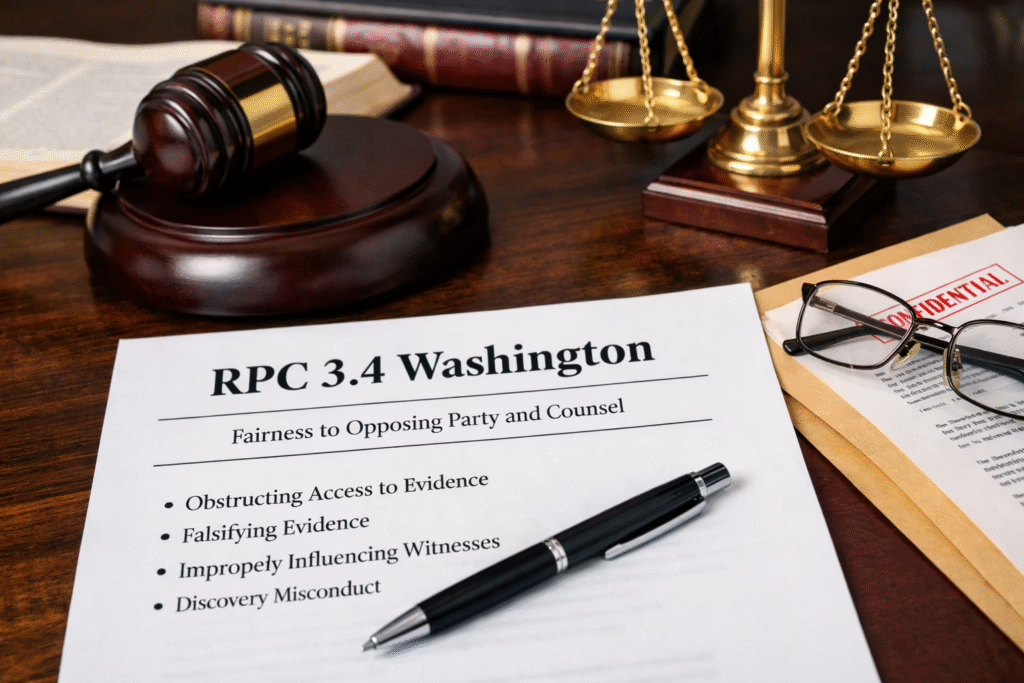
Litigation in Washington is governed not only by statutes and court rules, but also by ethical obligations imposed on attorneys. RPC 3.4 Washington, titled Fairness to Opposing Party and Counsel, establishes the professional standards lawyers must follow during disputes.
This rule plays a critical role in maintaining integrity within the adversarial system. It ensures that attorneys advocate zealously for their clients without undermining the fairness of judicial proceedings.
Understanding RPC 3.4 is essential for attorneys, clients involved in litigation, and anyone concerned about professional misconduct in Washington courts.
What Is RPC 3.4?
RPC 3.4 is part of the Washington Rules of Professional Conduct, which regulate attorney behavior statewide. The rule specifically addresses conduct toward opposing parties, opposing counsel, witnesses, and evidence.
The core principle of RPC 3.4 Washington is simple:
Lawyers must not obstruct access to evidence, falsify evidence, or engage in unfair litigation tactics.
This rule ensures that cases are decided on legitimate evidence and lawful advocacy—not manipulation or misconduct.
Key Provisions of RPC 3.4 Washington
1. Obstructing Access to Evidence
An attorney may not:
- Unlawfully obstruct another party’s access to evidence
- Destroy, conceal, or alter documents with evidentiary value
- Counsel a client or witness to do the same
Spoliation of evidence can result in court sanctions, adverse jury instructions, and professional discipline.
In civil cases, destroying relevant evidence after litigation is reasonably anticipated can significantly damage a party’s position.
2. Falsifying Evidence or Assisting False Testimony
RPC 3.4 prohibits:
- Fabricating evidence
- Assisting a witness in testifying falsely
- Offering inducements to witnesses that are prohibited by law
While attorneys may prepare witnesses for testimony, they may not coach them to misrepresent facts.
The distinction between lawful preparation and unethical influence is critical.
3. Fair Treatment of Witnesses
Lawyers may not request that a person refrain from voluntarily providing relevant information to another party, except in limited circumstances involving certain clients or agents.
This ensures that fact-finding remains transparent and not obstructed through improper influence.
4. Compliance With Discovery Rules
Under RPC 3.4 Washington, attorneys must:
- Make reasonably diligent efforts to comply with legally proper discovery requests
- Avoid frivolous discovery objections
- Follow court orders related to disclosure
Discovery abuse—such as intentional delay, overbroad objections, or concealment—may violate both civil procedure rules and ethical standards.
5. Improper Trial Conduct
The rule also prohibits attorneys from:
- Alluding to irrelevant or inadmissible matters at trial
- Asserting personal knowledge of facts not in evidence
- Stating personal opinions about credibility or guilt
These restrictions preserve the integrity of jury proceedings and prevent prejudice.
Why RPC 3.4 Washington Matters
The adversarial system depends on fairness. Courts rely on attorneys to uphold ethical standards while advocating for their clients.
Violations of RPC 3.4 may result in:
- Court-imposed sanctions
- Contempt findings
- Dismissal of claims or defenses
- Referral to the Washington State Bar Association
- Suspension or disbarment
In serious cases, misconduct may also expose attorneys and clients to civil liability.
Practical Implications for Clients
Clients involved in litigation should understand that their attorney:
- Cannot destroy unfavorable evidence
- Cannot conceal discoverable information
- Cannot influence witnesses improperly
Clients who request unethical conduct place both themselves and their attorney at risk.
If you suspect opposing counsel has violated RPC 3.4 Washington, remedies may include filing motions for sanctions, seeking protective orders, or pursuing disciplinary review.
Interaction With Other Ethical Rules
RPC 3.4 works alongside related ethical provisions, including:
- RPC 3.3 (Candor Toward the Tribunal)
- RPC 4.1 (Truthfulness in Statements to Others)
- RPC 8.4 (Misconduct)
Together, these rules reinforce the ethical foundation of Washington’s legal system.
Protecting the Integrity of Washington Courts
The fairness obligations imposed by RPC 3.4 Washington are not technicalities—they safeguard due process. Ethical advocacy ensures that outcomes are based on facts and law, not improper tactics.
Attorneys who disregard these obligations risk serious professional consequences and undermine public confidence in the justice system.
Contact Blanford Law Today
If you are involved in litigation and have concerns about professional conduct, discovery disputes, or ethical violations under RPC 3.4 Washington, experienced legal guidance is critical.
Contact Blanford Law today at ken@blanfordlaw.com or 253-720-9304 for guidance on your legal matter.
Additional Resources
Washington RPC 3.2 – Expediting Litigation
An overview of RPC 3.2 and an attorney’s ethical duty to make reasonable efforts to expedite litigation consistent with client interests.
https://blanfordlaw.com/washington-rpc-3-2-expediting-litigation/
Why Won’t My Attorney Give Me My Discovery? How to Get a Copy of Your Case File
A practical discussion of client rights regarding discovery materials and access to case documents in Washington.
https://blanfordlaw.com/why-will-my-attorney-not-give-me-my-discovery-how-can-i-get-a-copy-of-the-discovery-on-my-case/
RPC Violations in Suits Season 2 – Washington Ethics Analysis
A breakdown of ethical issues portrayed in Season 2 of Suits analyzed under Washington’s Rules of Professional Conduct.
https://blanfordlaw.com/rpc-violations-suits-season-2-washington/
Suits Season 3 Ethics – Washington RPC Perspective
An examination of legal ethics issues raised in Season 3 of Suits through the lens of Washington professional conduct rules.
https://blanfordlaw.com/suits-season-3-ethics/
RPC 1.16 – Attorney Withdrawal in Washington
A detailed explanation of when and how attorneys may withdraw from representation under Washington’s Rules of Professional Conduct.
https://blanfordlaw.com/rpc-1-16-attorney-withdrawal/