
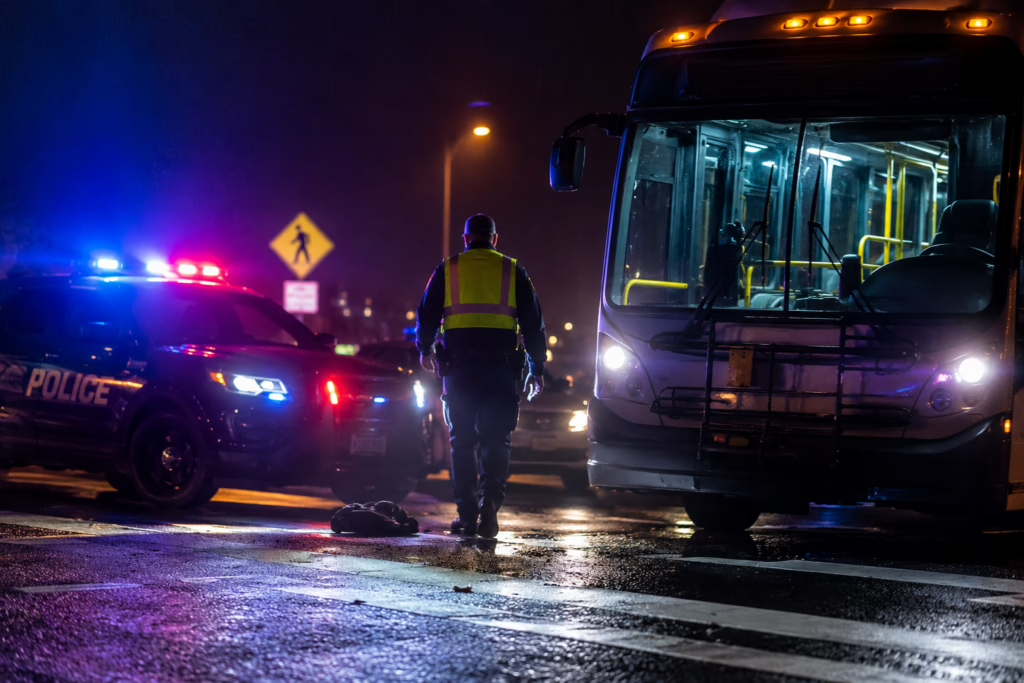
A recent Washington pedestrian accident near the Gorge Amphitheater left a Spokane Valley man injured after he was struck by a bus during the early morning hours of August 14, 2026.
According to reports, 29-year-old Alexis Eduardo Morga-Sevilla of Spokane Valley was walking near Silica Road Northwest and Sagecliffe Road Northwest in George when he was struck at approximately 1:30 a.m. He was airlifted to an out-of-area hospital for treatment. The collision remains under investigation.
Initial reports indicate investigators are considering whether Morga-Sevilla suddenly stepped into the path of the bus and whether his dark clothing made him more difficult for the driver to see at night.
Those facts may become important when fault is ultimately evaluated. However, an early investigative theory does not necessarily determine civil liability.
Pedestrian collisions often require a closer examination of visibility, reaction time, roadway position, speed, lighting, driver attentiveness, and the conduct of both the pedestrian and the driver immediately before impact.
Washington Pedestrian Accident Laws and Right of Way
Washington law places responsibilities on both pedestrians and motorists.
Under RCW 46.61.240, a pedestrian crossing a roadway somewhere other than a marked crosswalk or an unmarked crosswalk at an intersection generally must yield the right of way to vehicles already traveling on the roadway.
That rule could become relevant if investigators determine that the pedestrian entered the roadway outside a crosswalk.
But pedestrians’ duties do not eliminate motorists’ responsibilities.
Under RCW 46.61.245, every driver must exercise due care to avoid colliding with a pedestrian on a roadway. The statute also requires a driver to sound the horn when necessary and to take proper precautions when observing certain vulnerable pedestrians.
For that reason, liability in a pedestrian accident should generally be evaluated by looking at the conduct of everyone involved, rather than focusing on only one fact.
Can a Pedestrian Recover Compensation if They Were Partly at Fault?
Potentially, yes.
Washington follows a comparative-fault system.
Under RCW 4.22.005, fault attributed to an injured person generally reduces the amount of compensatory damages in proportion to that person’s share of responsibility. Importantly, contributory fault does not automatically prevent the injured person from recovering damages.
For example, suppose a pedestrian suffered $200,000 in compensable damages but was found 40 percent responsible for the accident.
Under Washington’s comparative-fault rule, the pedestrian’s damages could generally be reduced by 40 percent, leaving $120,000 before considering other legal or insurance issues.
That is very different from a rule under which any mistake by the pedestrian eliminates the claim entirely.
Why Comparative Fault Could Matter in the Gorge Bus Collision
Reports concerning the August 14 collision indicate investigators are examining whether the pedestrian stepped suddenly into the roadway and whether nighttime visibility contributed to the crash.
If evidence supports those conclusions, an insurance company could argue that the pedestrian bears some portion of the responsibility.
But that would not necessarily end the analysis.
Because RCW 4.22.005 allows damages to be apportioned according to fault, an investigation may also need to determine whether any action or inaction by the bus driver contributed to the collision.
Questions could include:
- How fast was the bus traveling?
- Were its headlights functioning properly?
- How far away was the pedestrian when he became visible?
- Was the driver maintaining a proper lookout?
- Was the driver distracted or fatigued?
- What was the available roadway lighting?
- Were there pedestrians or event-related traffic conditions in the area?
- Did the driver have sufficient time to brake or take evasive action?
- Was the bus being operated with reasonable care for the nighttime conditions?
Those facts could affect how fault is allocated.
Dark Clothing Does Not Automatically Decide Liability
Reports that a pedestrian was wearing dark-colored clothing may be relevant, especially in a collision occurring around 1:30 a.m.
But clothing color alone does not necessarily establish who was legally responsible.
A complete investigation may need to determine the actual visibility available to the driver.
That could include examining:
- Street lighting
- Bus headlights
- Weather conditions
- Road geometry
- Sight distances
- Other traffic
- The pedestrian’s location and movement
- The speed of the bus
- The driver’s reaction time
Under RCW 46.61.245, drivers remain obligated to exercise due care to avoid colliding with pedestrians. Whether that duty was satisfied depends on the evidence surrounding the particular accident.
Pedestrians Outside Crosswalks Still Have Legal Duties
At the same time, Washington law does impose duties on pedestrians who cross outside designated crossing areas.
RCW 46.61.240 provides that pedestrians crossing somewhere other than a marked crosswalk or an unmarked crosswalk at an intersection must generally yield to vehicles on the roadway.
The statute also addresses other situations, including crossing between signal-controlled intersections and diagonal crossings.
If investigators conclude that a pedestrian entered the road where vehicles had the right of way, that evidence may support an argument that the pedestrian shares responsibility.
But under Washington’s comparative-fault system, shared responsibility is not necessarily the same thing as no recovery.
Bus Accidents Can Raise Additional Liability Questions
When a pedestrian is struck by a bus rather than a privately owned passenger vehicle, additional issues may need to be investigated.
Depending on who owns and operates the bus, relevant questions may include:
- Whether the driver was working at the time
- Who employed the driver
- Who owned the bus
- Whether the employer may be responsible for the driver’s conduct
- Driver training and qualifications
- Hours worked before the collision
- Vehicle maintenance
- Inspection history
- Company safety policies
- GPS or telematics data
- Onboard camera recordings
- Dispatch records
- Applicable commercial insurance coverage
These issues can become especially important when a collision results in significant injuries.
What Evidence Should Be Preserved After a Pedestrian Accident?
Evidence can disappear quickly after a serious traffic collision.
Surveillance footage may be overwritten. Vehicle camera systems may automatically erase older recordings. Witnesses can become difficult to locate, and electronic vehicle information may be lost if it is not preserved.
Potentially important evidence may include:
- Police reports
- Scene photographs
- Surveillance footage
- Bus or dash-camera video
- Event-area camera footage
- Driver logs
- Vehicle inspection records
- GPS data
- Electronic vehicle data
- Cell-phone records
- Witness statements
- Medical records
- Air-ambulance records
- The pedestrian’s clothing
- Measurements of lighting and sight distance
When fault is disputed from the beginning, early preservation of evidence can be particularly important.
An Early Police Assessment Is Not the Final Word on Civil Liability
Police investigations provide important information about how a collision occurred.
However, an initial statement about what investigators believe may have happened is not necessarily the final determination of negligence in a civil personal injury claim.
Additional evidence may emerge later.
A personal injury investigation can include information that was unavailable during the initial police response, including vehicle data, surveillance video, witness testimony, expert analysis, and detailed measurements from the collision scene.
Insurance companies may also emphasize evidence suggesting that an injured pedestrian was responsible for the crash.
That makes it important to evaluate all available evidence before concluding that an injured person has no claim.
What Damages May Be Available After a Washington Pedestrian Accident?
When another person’s negligence causes or contributes to a pedestrian’s injuries, the injured person may be able to pursue compensation for damages allowed under Washington law.
Depending on the circumstances, those damages may include:
- Emergency medical expenses
- Hospital bills
- Surgery
- Rehabilitation
- Physical therapy
- Future medical treatment
- Lost wages
- Loss of earning capacity
- Pain and suffering
- Disability
- Loss of enjoyment of life
- Other accident-related losses
The pedestrian in the Gorge-area collision was reportedly airlifted for treatment, although the precise nature and extent of his injuries have not been publicly detailed.
What if Both the Pedestrian and Driver Were Negligent?
This is where Washington’s comparative-fault statute can become particularly important.
Under RCW 4.22.005, an injured person’s own fault generally reduces damages rather than automatically barring recovery.
For example, a jury could potentially decide that:
- The pedestrian was 60 percent responsible for entering the roadway; and
- The driver was 40 percent responsible for failing to react reasonably.
If the pedestrian had $500,000 in compensable damages, the award could generally be reduced by the pedestrian’s 60 percent share of fault.
The actual allocation of fault in any case depends on the evidence.
How Blanford Law Can Help After a Washington Pedestrian Accident
A serious Washington pedestrian accident can leave an injured person facing medical bills, lost income, rehabilitation, and uncertainty about whether insurance will cover those losses.
The situation can become even more difficult when police or an insurance company suggests the pedestrian contributed to the crash.
That does not necessarily mean the injured person has no legal options.
Blanford Law can investigate whether another person’s negligence caused or contributed to the collision, preserve evidence, review available insurance coverage, evaluate comparative-fault arguments, and pursue compensation when the evidence supports a claim.
Even where a pedestrian may share some responsibility, RCW 4.22.005 generally allows Washington courts to reduce compensation according to the person’s percentage of fault rather than automatically eliminating recovery.
If you are injured by the negligence of another, Blanford Law can help. Contact Blanford Law today at ken@blanfordlaw.com or 253-720-9304 for guidance on your legal matter.
Additional Resources
SCORE Jail Release Without Bail
Learn how some defendants may be released from SCORE Jail without posting bail and what factors can affect release conditions.
SCORE Jail Release
Review how the SCORE Jail release process works, including timing, custody status, and what families may need to know after an arrest.
Tacoma Motorcycle Accident Injured Riders
Learn about legal issues that can arise after a Tacoma motorcycle crash, including negligence, serious injuries, and insurance claims.
SCORE Jail DUI Arrest at Night
Understand what may happen after a nighttime DUI arrest involving SCORE Jail, including booking, release, and early case considerations.
Washington DUI Breath Test: State v. Sliger
Read about Washington DUI breath-test issues and how court decisions can affect the admissibility and reliability of testing evidence.