
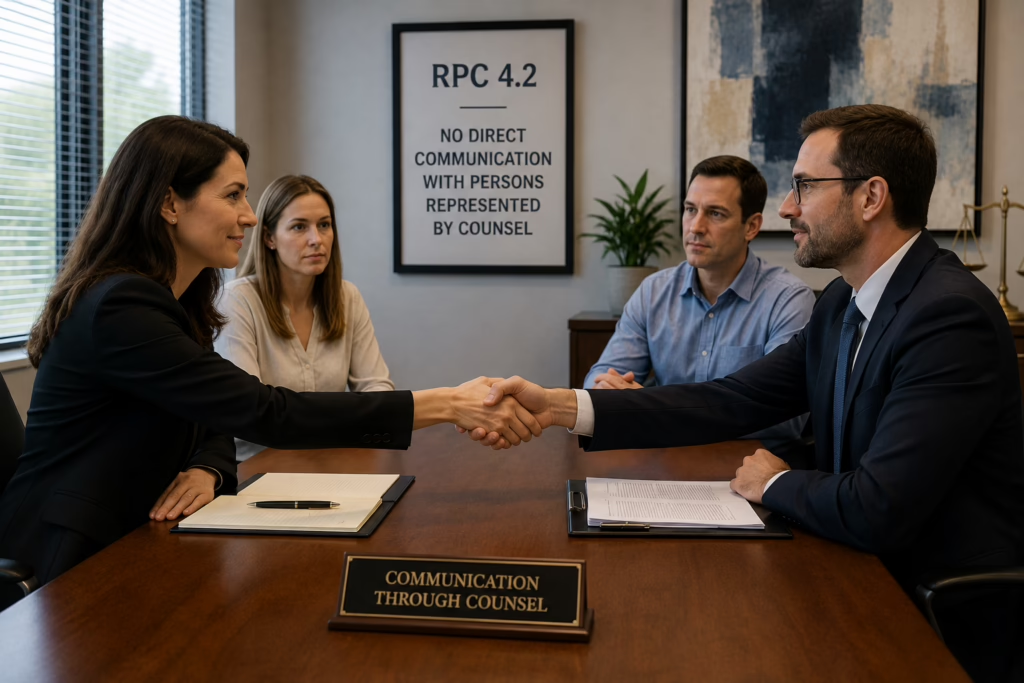
One of the fundamental ethical rules governing attorney conduct is the prohibition against communicating directly with a person who is represented by counsel about the subject of the representation. Washington RPC 4.2 protects the attorney-client relationship by requiring lawyers to communicate through opposing counsel rather than directly with represented individuals.
Whether handling litigation, business disputes, administrative matters, or negotiations, attorneys must understand when direct communication is prohibited and when exceptions apply. Violating RPC 4.2 can result in disciplinary action, exclusion of evidence, or other professional consequences.
What Is Washington RPC 4.2?
Washington Rule of Professional Conduct 4.2 provides:
In representing a client, a lawyer shall not communicate about the subject of the representation with a person the lawyer knows to be represented by another lawyer in the matter unless the other lawyer consents or the communication is authorized by law or court order.
The rule serves several important purposes:
- Protecting represented persons from undue influence.
- Preserving the attorney-client relationship.
- Preventing lawyers from obtaining uncounseled admissions.
- Promoting fairness throughout the legal process.
Why This Rule Exists
Comment 1 explains that represented individuals have chosen to receive legal advice through their attorney. Allowing opposing counsel to communicate directly with them could undermine that relationship and create opportunities for confusion or unfair pressure.
By requiring attorney-to-attorney communication, Washington RPC 4.2 helps ensure that legal matters proceed fairly and professionally.
The Rule Applies Even If the Represented Person Initiates Contact
Many people assume that if a represented person reaches out first, opposing counsel may freely respond.
That is not the case.
Comment 3 makes clear that the prohibition applies even when the represented person:
- Calls first.
- Sends an email.
- Initiates a text message.
- Requests to discuss the case.
If an attorney learns during the conversation that the individual is represented in the matter, the lawyer must immediately end the communication unless opposing counsel consents or another exception applies.
What Does “Knows” Mean?
Washington RPC 4.2 and Actual Knowledge
RPC 4.2 only applies when the lawyer knows the person is represented regarding the matter being discussed.
Comment 8 explains that actual knowledge may be inferred from the circumstances. Lawyers cannot deliberately ignore obvious facts to avoid compliance.
For example, if opposing counsel has filed a notice of appearance or previously identified themselves as representing a party, an attorney cannot pretend otherwise.
Communications Outside the Representation
The rule is narrower than many people realize.
Comment 4 explains that lawyers may communicate with represented individuals about matters unrelated to the legal representation.
For example:
- Two businesses involved in litigation may still negotiate unrelated contracts.
- A lawyer may speak with a represented individual about personal matters unrelated to the pending dispute.
- A represented person may seek advice from another attorney regarding a different legal issue.
Only communications concerning the subject of the representation are restricted.
Clients May Communicate Directly
Importantly, RPC 4.2 regulates lawyers—not clients.
Parties remain free to communicate directly with one another unless another law or court order provides otherwise.
Additionally, attorneys may advise their own clients regarding communications that the client is legally entitled to make.
For example, an attorney may help a client prepare for a conversation with the opposing party without personally participating in prohibited communications.
Communications Authorized by Law
There are circumstances in which direct communication is expressly authorized.
Examples include:
- Communications permitted by statute.
- Court-authorized communications.
- Certain governmental investigations before enforcement proceedings begin.
- Constitutional communications with government officials.
Government attorneys must still comply with RPC 4.2 while also respecting constitutional protections afforded to criminal defendants.
Organizations and Represented Businesses
Washington RPC 4.2 and Organizational Representation
When an organization is represented by counsel, attorneys cannot freely communicate with every employee.
Comment 7 prohibits communication with organizational representatives who:
- Supervise or direct the organization’s lawyer regarding the matter.
- Regularly consult with counsel concerning the matter.
- Have authority to bind the organization regarding the matter.
However, consent is generally not required before communicating with former employees unless they have their own attorney representing them in the matter.
Lawyers must also avoid investigative methods that violate the organization’s legal rights, consistent with RPC 4.4.
Limited Scope Representation
Washington recognizes limited scope legal representation.
Comment 11 explains that a person receiving limited legal services is generally considered unrepresented unless opposing counsel has received written notice identifying the attorney’s limited representation.
This allows lawyers to determine when communications must go through limited representation counsel.
What If the Lawyer Is Unsure?
Comment 6 recognizes that difficult situations sometimes arise.
If an attorney is uncertain whether communication is permitted, the lawyer may seek guidance from the court before proceeding.
In exceptional circumstances, a court may authorize communications that would otherwise be prohibited—for example, when direct communication is necessary to prevent reasonably certain injury.
Practical Examples
Washington RPC 4.2 commonly arises in:
- Civil litigation.
- Personal injury claims.
- Family law disputes.
- Business litigation.
- Employment matters.
- Administrative proceedings.
- Government investigations.
Attorneys should always verify whether a person is represented before discussing the subject of a legal matter.
Consequences of Violating RPC 4.2
Improper communication with a represented person may result in:
- Attorney discipline.
- Motions to disqualify counsel.
- Exclusion of improperly obtained evidence.
- Damage to professional reputation.
- Increased litigation costs.
Even unintentional violations can create significant ethical concerns.
Why Washington RPC 4.2 Matters
The attorney-client relationship depends on trust, confidentiality, and effective legal advice. Washington RPC 4.2 helps preserve those principles by ensuring that represented individuals receive legal guidance through their chosen attorney rather than facing direct communications from opposing counsel.
By requiring lawyers to respect existing attorney-client relationships, the rule promotes professionalism, fairness, and confidence in Washington’s legal system.
Contact Blanford Law
If you have questions about attorney ethics, professional responsibility, or Washington’s Rules of Professional Conduct, contact Blanford Law today at ken@blanfordlaw.com or 253-720-9304 for guidance on your legal matter.
Additional Resources
- Corporate Representation in Washington Court – Learn when corporations, LLCs, and other business entities must be represented by a licensed attorney in Washington courts.
- RPC 1.5 – Legal Fees – Understand Washington’s ethical rules governing attorney fees, fee agreements, and what constitutes a reasonable legal fee.
- RPC 1.4 – Communication – Explore an attorney’s duty to keep clients informed, explain legal matters, and communicate effectively throughout representation.
- RPC 1.7 – Conflict of Interest – Learn how Washington lawyers must identify and manage conflicts of interest that may affect their representation of clients.
- Washington Nonadjudicative Proceedings – Discover the ethical obligations attorneys owe when representing clients before legislative bodies and administrative agencies under RPC 3.9.