
Attorneys often represent clients in court, but many legal matters are handled outside the courtroom before legislative bodies and administrative agencies. Washington nonadjudicative proceedings are governed by Rule of Professional Conduct (RPC) 3.9, which establishes ethical obligations for lawyers appearing before governmental decision-makers engaged in rulemaking or policymaking rather than deciding legal disputes.
Understanding these requirements helps ensure transparency, protects the integrity of the governmental process, and maintains public confidence in legal advocacy.
What Are Washington Nonadjudicative Proceedings?
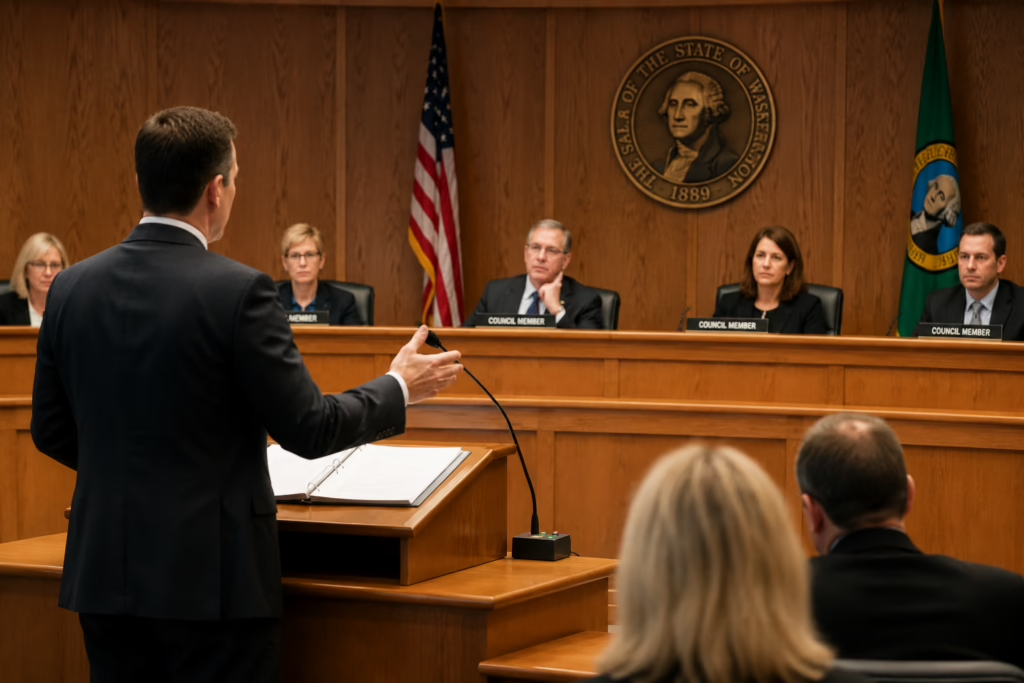
A nonadjudicative proceeding occurs when a governmental body is making policy or creating rules rather than resolving a legal dispute between parties. Examples include:
- Legislative committee hearings
- City council meetings considering ordinances
- County commission hearings
- Administrative agency rulemaking hearings
- Public hearings on proposed regulations
Unlike a courtroom proceeding, these forums focus on developing public policy instead of determining liability or deciding contested legal claims.
RPC 3.9 and Washington Nonadjudicative Proceedings
RPC 3.9 provides that:
A lawyer representing a client before a legislative body or administrative agency in a nonadjudicative proceeding must disclose that the lawyer is appearing in a representative capacity.
The rule also requires attorneys to comply with several other Rules of Professional Conduct governing honesty, fairness, and professional conduct, including:
- RPC 3.3 (Candor Toward the Tribunal)
- RPC 3.4 (Fairness to Opposing Party and Counsel)
- RPC 3.5 (Impartiality and Decorum of the Tribunal)
Although these proceedings are not court cases, the same principles of honesty and integrity largely apply.
Why Disclosure Matters
One of the central requirements of RPC 3.9 is transparency.
Lawyers cannot appear as if they are speaking solely on their own behalf when they are actually representing a client. Decision-makers deserve to know:
- Who the attorney represents
- Whose interests are being advocated
- Whether statements are being made in a representative capacity
This disclosure allows legislators and administrative agencies to properly evaluate testimony, legal arguments, and policy recommendations.
Honesty Before Government Decision-Makers
The Focus Keyphrase in Practice: Washington Nonadjudicative Proceedings
During Washington nonadjudicative proceedings, attorneys must present truthful information and avoid misleading statements.
Comment 1 to RPC 3.9 explains that legislative and administrative bodies should be able to rely upon the integrity of lawyers appearing before them just as courts rely upon attorneys during litigation.
This means lawyers must:
- Present truthful factual information
- Avoid material misrepresentations
- Respect procedural rules
- Maintain professionalism throughout the proceeding
The ethical duty extends beyond simply avoiding false statements—it includes preserving the integrity of the governmental decision-making process.
Lawyers Are Held to Higher Standards
Comment 2 recognizes that non-lawyers may also speak before legislative bodies or administrative agencies.
However, attorneys are licensed professionals subject to the Rules of Professional Conduct.
Because of that professional status, governmental bodies may reasonably expect lawyers to:
- Demonstrate candor
- Follow procedural rules
- Maintain professional integrity
- Conduct themselves consistently with courtroom ethics
In other words, becoming an advocate outside the courtroom does not reduce a lawyer’s ethical responsibilities.
When RPC 3.9 Applies
RPC 3.9 applies when:
- A lawyer represents a client;
- Before a governmental agency or legislative body;
- During an official hearing or meeting; and
- The lawyer presents evidence or legal or policy arguments on behalf of the client.
Common examples include:
- Testifying before the Washington Legislature
- Presenting comments during agency rulemaking
- Speaking before a city council regarding proposed ordinances
- Representing businesses during regulatory hearings
When RPC 3.9 Does Not Apply
The rule does not govern every interaction between lawyers and government agencies.
According to Comment 3, RPC 3.9 generally does not apply to:
- Contract negotiations with government agencies
- License applications
- Permit applications
- Routine regulatory filings
- Income tax return filings
- Government investigations
- Agency examinations or audits
Instead, those matters are generally governed by Rules 4.1 through 4.4, which address truthfulness in statements to others and interactions with represented and unrepresented persons.
Practical Considerations for Washington Attorneys
Lawyers representing clients in policymaking proceedings should prepare with the same care used in litigation.
Best practices include:
- Clearly identify the client at the beginning of any appearance.
- Confirm all factual statements are accurate and supported.
- Avoid exaggerating evidence or legal authority.
- Follow agency procedures and meeting rules.
- Maintain professionalism when addressing officials and opposing viewpoints.
These practices help attorneys satisfy their ethical obligations while strengthening their credibility before governmental bodies.
Why RPC 3.9 Protects the Public
Legislative bodies and administrative agencies often make decisions affecting thousands—or even millions—of Washington residents.
Because policymakers frequently rely upon testimony and legal analysis presented during public hearings, honesty and transparency are essential. RPC 3.9 helps ensure that public officials receive reliable information from attorneys advocating for private interests while preserving confidence in the governmental process.
Conclusion
Washington RPC 3.9 recognizes that ethical advocacy extends beyond the courtroom. Attorneys representing clients before legislatures and administrative agencies must disclose whom they represent, provide truthful information, and comply with many of the same ethical standards that apply during litigation.
Whether advocating for businesses, individuals, or organizations, lawyers have a professional responsibility to maintain honesty, fairness, and integrity whenever they participate in nonadjudicative governmental proceedings.
Contact Blanford Law
If you have questions about legal ethics, administrative proceedings, or representation before Washington governmental agencies, contact Blanford Law today at ken@blanfordlaw.com or 253-720-9304 for guidance on your legal matter.
Additional Resources
- IRLJ 6.1 – Time – Learn how Washington’s Infraction Rules for Courts of Limited Jurisdiction calculate and apply time deadlines in legal proceedings.
- IRLJ 6.5 – Rules Superseded – Explore which procedural rules are superseded under IRLJ 6.5 and how these provisions affect infraction cases in Washington.
- RPC 3.9 – Washington Lawyer – Read the full text and analysis of Washington Rule of Professional Conduct 3.9 governing attorneys appearing in nonadjudicative proceedings.
- Appeal to Superior Court – Understand the process for appealing certain district and municipal court decisions to the Washington Superior Court, including important procedural requirements.