
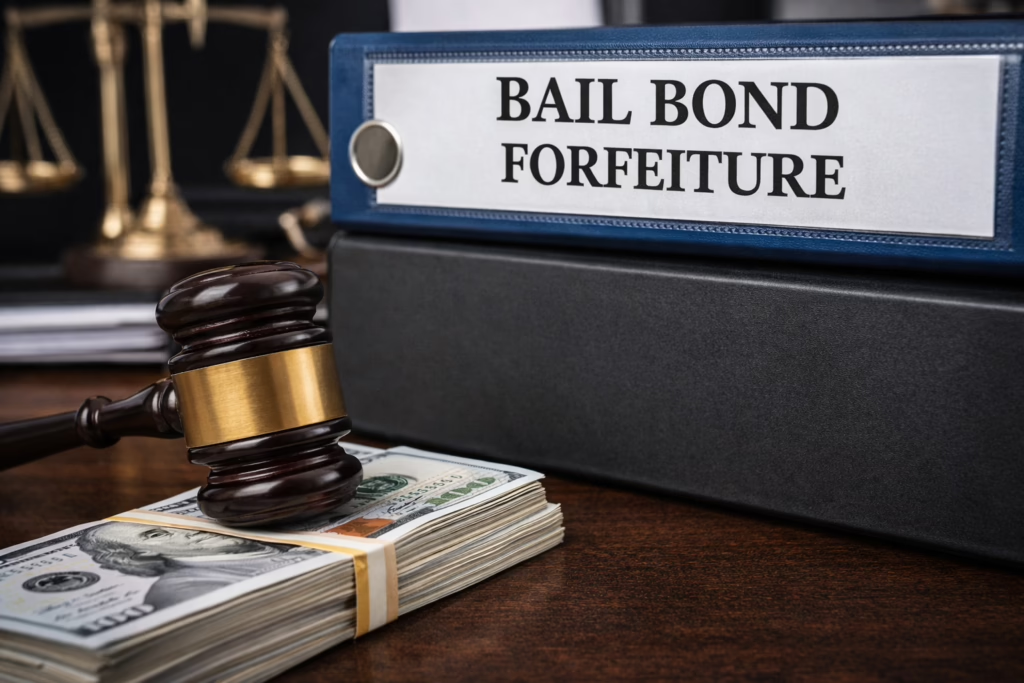
Washington Bail Bond Forfeiture Law Explained
A recent Washington Court of Appeals decision provides critical guidance for bail bond companies facing forfeiture. In State v. All City Bail Bonds, the court examined whether a bonding company could avoid a $20,000 forfeiture after a defendant failed to appear in court.
The court ultimately ruled that the forfeiture was justified because the bail bond company failed to meet its legal obligations and, in fact, contributed to the defendant’s noncompliance.
This case is essential for bail bond companies because it clarifies when courts will enforce full forfeiture and when partial relief may still be available.
How Washington Bail Bond Forfeiture Law Works
Purpose of Bail Bonds
Under Washington law, bail bonds serve a clear purpose:
- Ensure the defendant appears at required court hearings
- Promote compliance with court orders
- Allow pretrial release without unnecessary detention
Courts consistently emphasize that bail is not intended to punish the surety or generate revenue for the state.
When a Bond Is Forfeited
A bail bond may be forfeited when:
- A defendant fails to appear in court
- The court enters a default judgment
- A bench warrant is issued
Once forfeited, the surety can request exoneration under RCW 10.19.140—but only under specific conditions.
Washington Bail Bond Forfeiture Law and Exoneration
Direct Responsibility Requirement
To recover forfeited funds, the bail bond company must typically show it was:
- Directly responsible for returning the defendant to custody, or
- Directly responsible for assisting law enforcement in apprehension
If law enforcement finds the defendant without help from the surety, full exoneration is unlikely.
Why the Court Denied the Bail Bond Company’s Request
Failure to Act Promptly
In this case, the bonding company:
- Knew the defendant had missed a court date
- Maintained contact with the defendant
- Failed to notify law enforcement of the defendant’s location
Instead of acting immediately, the company allowed the defendant to delay surrender until after the holidays.
Improper Interference with Court Authority
The court found the company’s actions particularly problematic because:
- It effectively decided when the defendant would return to court
- It withheld critical information from authorities
- It enabled the defendant’s continued noncompliance
The court viewed this conduct as egregious, going beyond simple negligence.
Court Discretion in Bail Bond Forfeiture Cases
Abuse of Discretion Standard
Washington appellate courts review bail forfeiture decisions under an abuse of discretion standard. This means the trial court’s decision will stand if it has:
- Reasonable legal grounds
- Fact-based justification
- A logical basis in the record
Here, the appellate court found the trial court had valid reasons to deny the motion to vacate forfeiture.
Possibility of Partial Exoneration
Although the court upheld the forfeiture, it also recognized that:
- The trial court did not fully explain whether partial exoneration was appropriate
- Additional fact-finding was necessary
As a result, the case was remanded to determine whether some portion of the bond should be returned.
Key Lessons for Bail Bond Companies
Act Immediately When a Defendant Fails to Appear
Time is critical. Delays can:
- Increase liability
- Reduce chances of exoneration
- Lead to full forfeiture
Cooperate Fully with Law Enforcement
Failing to share information—or worse, withholding it—can:
- Be viewed as obstruction
- Eliminate equitable relief
- Justify harsh financial penalties
Do Not Assume Judicial Authority
Bail bond companies cannot:
- Decide when a defendant should return
- Negotiate delays outside court approval
- Override court orders
Doing so exposes the company to significant financial risk.
Why This Case Matters
This case reinforces that Washington courts will:
- Hold bail bond companies accountable for their conduct
- Deny relief where the surety contributes to noncompliance
- Carefully balance fairness, public policy, and court authority
For bail bond professionals, this decision is a clear warning: compliance and diligence are essential to avoid forfeiture.
Call to Action
If you operate a bail bond company and are facing forfeiture or legal challenges, experienced legal guidance is critical.
Contact Blanford Law today at ken@blanfordlaw.com or 253-720-9304 for guidance on your legal matter.
Additional Resources
- State v. Adams Bail Bond – Analysis of another Washington case addressing bail bond forfeiture and the responsibilities of sureties.
https://blanfordlaw.com/state-v-adams-bail-bond/ - Does the Trial Court Have Discretion Regarding Bail Bond Forfeiture? – Explains how Washington courts exercise discretion in forfeiture decisions.
https://blanfordlaw.com/does-the-trial-court-have-discretion-regarding-the-forfeiture-of-bail-bonds/ - Understanding RCW 10.19.090 – A breakdown of Washington’s bail bond forfeiture statute and how forfeiture is triggered.
https://blanfordlaw.com/understanding-rcw-10-19-090-forfeiture-and-exoneration-of-recognizance-in-washington-state/ - Navigating Bail Bond Forfeiture: State v. All City Bail Bonds – A deeper look at the case and its implications for bail bond companies.
https://blanfordlaw.com/navigating-the-complexities-of-bail-bond-forfeiture-a-look-at-state-v-all-city-bail-bonds/ - Bail Bond Exoneration in Washington – Guidance on when and how a surety may recover forfeited bond amounts.
https://blanfordlaw.com/bail-bond-exoneration-washington/