
Washington Cell Site Simulator Law Explained
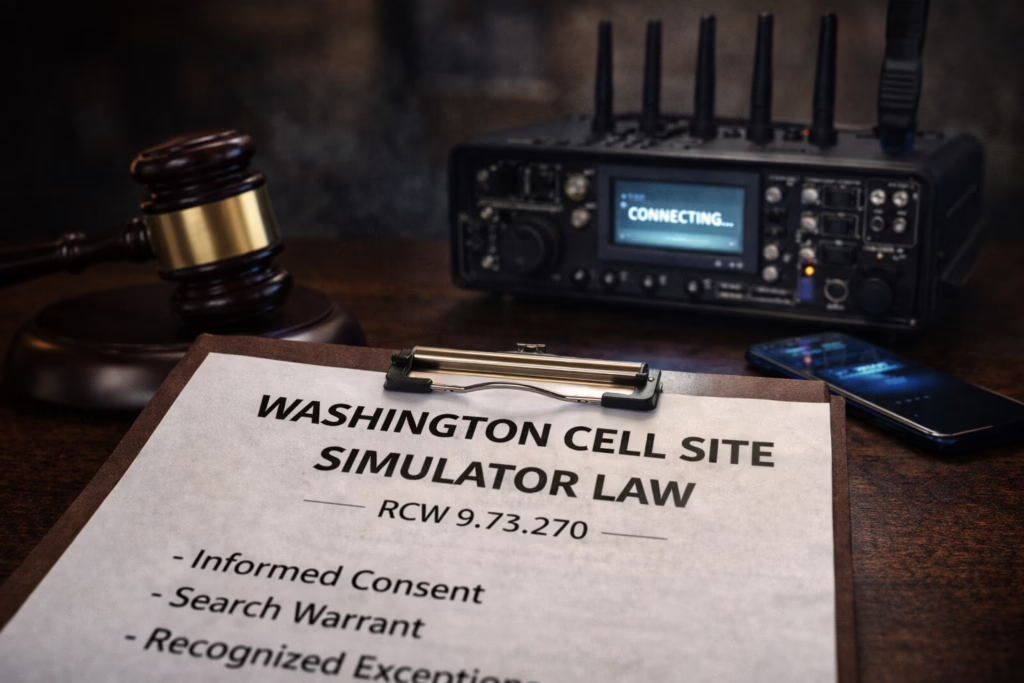
Washington has enacted strong privacy protections when it comes to electronic surveillance. Under RCW 9.73.270, law enforcement agencies are restricted in how they collect and use electronic data through cell site simulator devices.
You can read the full statute here:
https://app.leg.wa.gov/RCW/default.aspx?cite=9.73.270
The Washington cell site simulator law makes it clear: government agencies cannot collect your electronic data without proper legal authority.
What Is a Cell Site Simulator?
A cell site simulator (often referred to as a “Stingray” device) mimics a cell phone tower. It forces nearby phones to connect, allowing law enforcement to collect:
- Location data
- Identifying information
- Metadata about communications
Because these devices can sweep up data from many people—not just suspects—Washington law strictly regulates their use.
Key Requirements Under RCW 9.73.270
1. Informed Consent
Law enforcement may collect electronic data if:
- The individual gives informed consent
This means the person must understand what data is being collected and agree to it voluntarily.
2. Warrant Requirement (Core Protection)
The most common legal pathway is obtaining a search warrant.
To be valid, the warrant must:
- Be based on probable cause
- Describe with particularity:
- The person
- The place
- The thing to be searched or seized
This aligns with both Washington and federal constitutional protections against unreasonable searches.
3. Recognized Exceptions to the Warrant Requirement
In limited situations, law enforcement may act without a warrant if a legally recognized exception applies, such as:
- Exigent circumstances (emergencies)
- Other established constitutional exceptions
However, these exceptions are narrowly applied and often scrutinized in court.
Why Washington Cell Site Simulator Law Matters
Strong Privacy Protections
Washington is known for having some of the strongest privacy laws in the country. RCW 9.73.270 reflects that by:
- Limiting mass data collection
- Requiring judicial oversight
- Protecting individuals not under investigation
Impact on Criminal Cases
If law enforcement violates RCW 9.73.270:
- Evidence may be challenged or suppressed
- Cases may be weakened or dismissed
- Constitutional rights violations may be raised
This makes the statute highly relevant in criminal defense cases involving digital evidence.
Legal Risks for Law Enforcement and Government Agencies
Failure to comply with RCW 9.73.270 can result in:
- Suppression of unlawfully obtained evidence
- Potential civil liability
- Increased scrutiny of investigative practices
Courts take privacy violations seriously, especially when broad surveillance tools are used improperly.
Key Takeaways
- Cell site simulators collect sensitive electronic data
- Washington law requires consent, a warrant, or a valid exception
- Warrants must meet strict probable cause and specificity requirements
- Violations can significantly impact legal proceedings
Call to Action
If you have questions about electronic surveillance, privacy rights, or criminal defense issues involving digital evidence, experienced legal guidance is essential.
Contact Blanford Law today at ken@blanfordlaw.com or 253-720-9304 for guidance on your legal matter.
Additional Resources
- State v. Adams Bail Bond – Analysis of bail bond forfeiture and surety responsibilities.
https://blanfordlaw.com/state-v-adams-bail-bond/ - Does the Trial Court Have Discretion Regarding Bail Bond Forfeiture? – Learn how courts evaluate forfeiture decisions.
https://blanfordlaw.com/does-the-trial-court-have-discretion-regarding-the-forfeiture-of-bail-bonds/ - Understanding RCW 10.19.090 – Overview of Washington’s bail bond forfeiture statute.
https://blanfordlaw.com/understanding-rcw-10-19-090-forfeiture-and-exoneration-of-recognizance-in-washington-state/ - Navigating Bail Bond Forfeiture: State v. All City Bail Bonds – Detailed look at bail forfeiture law.
https://blanfordlaw.com/navigating-the-complexities-of-bail-bond-forfeiture-a-look-at-state-v-all-city-bail-bonds/ - Bail Bond Exoneration in Washington – Guidance on recovering forfeited bonds.
https://blanfordlaw.com/bail-bond-exoneration-washington/