
A Quincy SR-28 crash involving two vehicles sent a woman and two children to a local hospital, raising important questions about right-of-way rules, passenger injuries, and legal responsibility under Washington law. The collision, which occurred in February 2017, illustrates how quickly a routine highway maneuver can lead to a serious traffic incident.
For Washington drivers and families, understanding what happens after a collision can make a meaningful difference when seeking medical treatment, dealing with insurance companies, and evaluating potential personal injury claims.
What Happened in the Quincy SR-28 Crash?
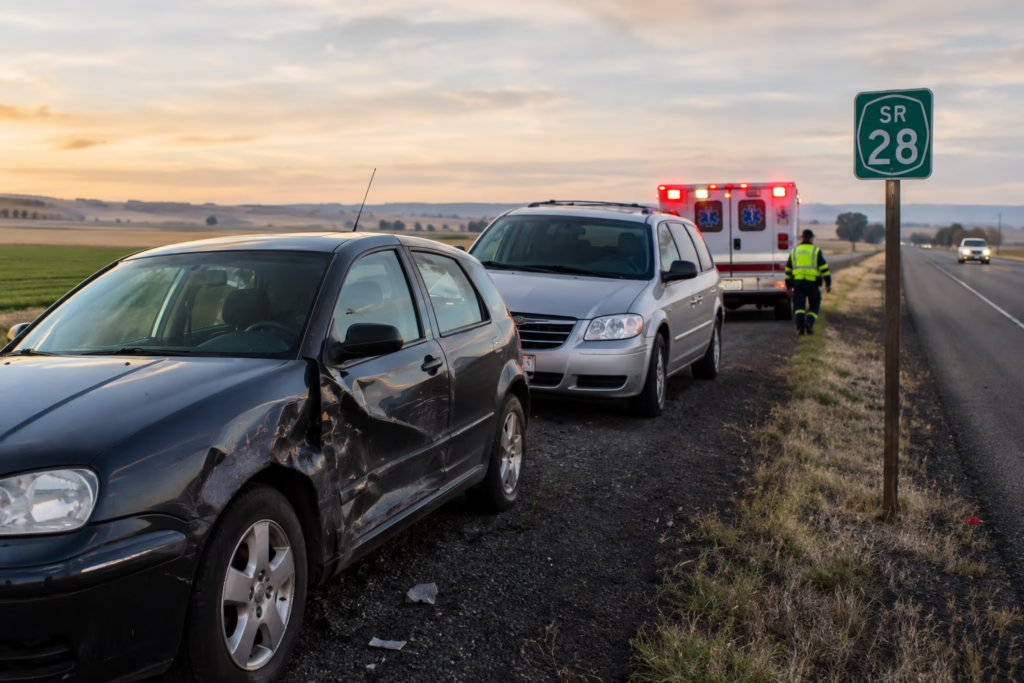
On February 26, 2017, at approximately 4:25 p.m., a two-vehicle collision occurred on State Route 28, approximately 1.5 miles east of Quincy in Grant County.
According to information attributed to the Washington State Patrol (WSP), a 2002 Volkswagen Golf had been stopped on the eastbound shoulder of SR-28. As its driver attempted to reenter the highway, the Volkswagen was struck by a 2010 Chrysler Town and Country traveling along the roadway.
The Volkswagen’s driver, a 30-year-old woman, and two children, ages eight and nine, were transported to Quincy Valley Medical Center for medical evaluation.
The driver of the Chrysler and her nine-year-old passenger were reportedly uninjured.
Both vehicles sustained damage. The Washington State Patrol reportedly cited the Volkswagen driver for failing to yield the right-of-way.
Although the three occupants were transported to the hospital, the publicly reported information did not establish that they suffered serious or permanent injuries.
Washington Right-of-Way Laws and Highway Collisions
Who Must Yield When Entering a Highway?
Washington law requires drivers to exercise reasonable care when entering or reentering a roadway.
Under RCW 46.61.205 — Vehicle Entering Highway, drivers entering a highway from a private road or driveway must yield to vehicles lawfully approaching on the highway.
Although this particular statute addresses private roads and driveways, other traffic laws and general negligence principles may apply when a driver attempts to merge from a highway shoulder into an active travel lane.
Before entering traffic, motorists should check mirrors, watch for approaching vehicles, signal when required, and ensure there is sufficient space to complete the maneuver safely.
Failure to take these precautions can create dangerous situations, especially on rural highways where vehicles may be traveling at higher speeds.
Does a Failure-to-Yield Citation Establish Liability?
A traffic citation may be important evidence in a personal injury case, but it does not automatically establish civil liability.
To prove negligence, an injured person generally must demonstrate that another party owed a legal duty, breached that duty, and caused legally compensable harm.
Investigators and attorneys may examine collision reports, witness statements, roadway conditions, vehicle damage, and applicable traffic laws when evaluating responsibility.
The Washington State Patrol provides information about collision reports and traffic safety, including resources for motorists involved in accidents.
Child Passenger Injuries After a Washington Car Accident
One of the most concerning aspects of the Quincy collision was the involvement of two young passengers who required hospital evaluation.
Children can experience physical and emotional injuries following a motor vehicle collision, even when symptoms are not immediately apparent.
Potential injuries may include:
- Concussions and traumatic brain injuries
- Neck and back injuries
- Broken bones and soft tissue damage
- Seat belt-related injuries
- Emotional distress and anxiety following a collision
These are examples of injuries that can occur in motor vehicle accidents, not confirmed diagnoses involving the children in this particular crash.
Parents should seek appropriate medical evaluation when children experience concerning symptoms following an accident and follow their healthcare providers’ recommendations.
Can a Child Recover Compensation After a Car Accident?
Under Washington law, an injured child may have a personal injury claim when another party’s negligence causes an injury.
Potential compensation may include medical expenses, future treatment costs, pain and suffering, and other legally recognized damages.
Importantly, a child’s legal rights are evaluated separately from the actions of the adults involved in the collision. A parent’s negligence is not automatically attributed to a child passenger.
Because claims involving minors can involve additional legal protections and settlement procedures, families should consider consulting an attorney before resolving a child’s injury claim.
How Washington Comparative Fault Rules Affect a Quincy SR-28 Crash
Washington follows a pure comparative fault system.
Under RCW 4.22.005 — Effect of Contributory Fault, an injured person’s compensation may be reduced according to their percentage of responsibility for the incident.
For example, if an injured claimant establishes $100,000 in damages but is found 20% responsible for the accident, theaward would generally be reduced to $80,000.
However, a child passenger does not automatically share responsibility simply because the driver of the vehicle may have been negligent.
In a two-vehicle collision, determining liability may require examining whether either driver failed to maintain a proper lookout, drove at an unsafe speed, or otherwise contributed to the accident.
A citation issued following an accident may be relevant, but a complete civil liability analysis depends on all the available evidence.
What Compensation May Be Available After a Washington Car Accident?
Individuals injured because of another person’s negligence may be entitled to pursue compensation for their losses.
Depending on the circumstances, recoverable damages may include:
- Emergency medical treatment and hospitalization
- Follow-up medical care and rehabilitation
- Lost wages and diminished earning capacity
- Future medical expenses
- Physical pain and emotional suffering
- Loss of enjoyment of life
The amount of compensation available depends on the evidence, the severity of the injuries, the applicable insurance coverage, and the legal responsibility of the parties involved.
How Long Do Accident Victims Have to File a Claim?
Under RCW 4.16.080 — Actions Limited to Three Years, most Washington personal injury lawsuits must be filed within three years.
However, special rules may apply when the injured person is a minor.
RCW 4.16.190 — Statute Tolled by Personal Disability provides circumstances in which the limitations period may be tolled, including certain claims involving individuals under age 18.
Other exceptions and procedural requirements may apply, particularly when a government entity is involved.
Because the Quincy collision occurred in 2017, anyone evaluating a potential claim arising from that accident should obtain an individualized legal assessment rather than assume the filing deadline remains open.
What Should Families Do After a Serious Car Accident?
After a collision involving injuries, families should prioritize medical care and preserve evidence that may become important to an insurance claim or lawsuit.
Important steps include obtaining the official collision report, photographing vehicle damage, retaining medical records and bills, documenting symptoms, and preserving relevant communications with insurance companies.
The Washington State Patrol provides resources concerning traffic safety and collision reporting in Washington.
Families should also exercise caution before accepting an insurance settlement or signing a release, particularly when a child has sustained injuries that may require additional treatment.
Contact Blanford Law About a Washington Car Accident
A motor vehicle collision involving children can leave families facing medical concerns, unexpected expenses, and difficult insurance questions.
Blanford Law helps Washington residents understand their rights, evaluate potential personal injury claims, and navigate legal issues following motor vehicle accidents.
Whether a collision involves a failure to yield, unsafe merging, or injuries to a child passenger, understanding Washington law can help families make informed decisions.
Contact Blanford Law today at ken@blanfordlaw.com or 253-720-9304 for guidance on your legal matter.
Additional Resources
For more information about Washington traffic laws, accident liability, and roadway safety, explore these related articles from Blanford Law:
- Omak Pedestrian Accident: Crosswalk Injuries and Washington Law
Learn how Washington pedestrian right-of-way laws affect accident liability and what legal options may be available to people injured in crosswalk collisions. - Washington DUI License Suspension: Understanding Your Rights
Understand Washington’s DUI-related driver’s license suspension process, important deadlines, and the potential consequences of impaired driving. - Snoqualmie Pass Chain Requirements and WSP Enforcement
Explore Washington’s tire chain requirements, winter driving safety rules, and how the Washington State Patrol enforces restrictions on mountain highways. - Washington Move Over Law: I-90 Crash and Driver Responsibilities
Learn about Washington’s Move Over Law, the responsibilities drivers have when approaching emergency vehicles, and how violations can contribute to serious highway collisions. - Washington Mountain Pass Accidents: Liability and Injury Claims
Discover how hazardous road conditions, driver negligence, and Washington personal injury laws can affect compensation claims following mountain pass accidents.