
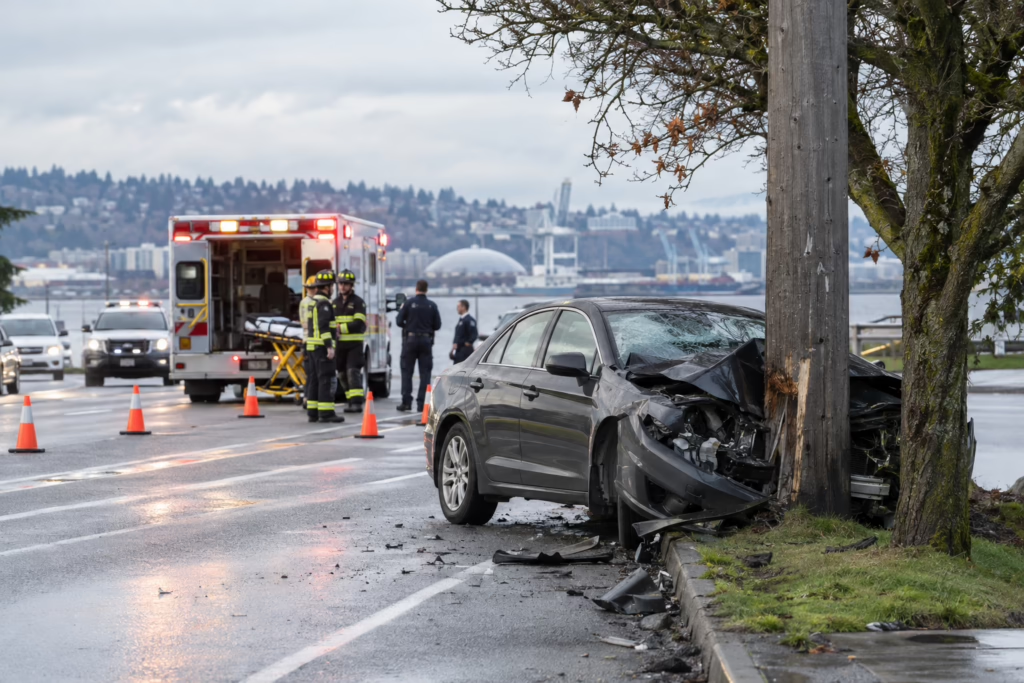
A Tacoma Schuster Parkway crash critically injured two people Wednesday afternoon after a vehicle struck a utility pole and a tree, highlighting the potentially devastating consequences of serious automobile collisions and the legal issues injured people and their families may face afterward.
According to KIRO 7, the crash occurred on September 9, 2026. Tacoma Fire reported the collision at approximately 2 p.m. Emergency responders had to extract two patients from the vehicle before transporting them to nearby hospitals. Southbound Schuster Parkway was closed while Tacoma police investigated, and northbound traffic was also slowed.
The cause of the collision has not been publicly established. For anyone seriously injured in a crash like this one, however, determining what happened is only one part of the process. Questions involving fault, insurance coverage, medical expenses, lost income, long-term injuries, and compensation can quickly become just as important.
Tacoma Schuster Parkway Crash and Potential Personal Injury Claims
A crash involving critical injuries can result in substantial medical treatment and long-term financial consequences. Depending on what investigators ultimately determine, an injured driver or passenger may have grounds to pursue a Washington personal injury claim against a person or entity whose negligence contributed to the collision.
A personal injury case generally focuses on whether another party failed to exercise reasonable care and whether that failure caused the claimant’s injuries.
In a vehicle collision, potentially relevant factors can include distracted driving, excessive speed, impairment, unsafe lane changes, following too closely, failure to maintain a vehicle, or other negligent conduct. In some cases, an investigation may identify more than one contributing factor.
At this stage, there is no public information showing that any of those circumstances caused the Schuster Parkway crash. Tacoma police are investigating, and conclusions about legal responsibility should be based on evidence.
Injured Passengers May Have Their Own Claims
When a vehicle contains multiple occupants, the legal rights of a passenger can be significantly different from those of the driver.
A passenger who suffers serious injuries generally did not control how the vehicle was being operated. If evidence eventually establishes that the driver negligently caused the crash, an injured passenger may potentially pursue compensation through applicable liability insurance.
There may also be circumstances in which another motorist, a vehicle manufacturer, a vehicle owner, or another party contributed to the accident.
This is one reason a serious single-vehicle collision should not automatically be viewed as a case in which there is “no one to make a claim against.” A careful personal injury investigation can identify the parties involved and determine what insurance coverage may be available.
Why Investigating a Serious Tacoma Car Accident Matters
After a major collision, evidence can play a critical role in determining whether an injured person is entitled to compensation.
An attorney investigating a serious accident may review the police collision report, photographs of the scene, vehicle damage, witness accounts, surveillance footage, roadway evidence, medical documentation, and available electronic vehicle data.
Depending on the circumstances, cellphone records, vehicle maintenance histories, event data recorder information, or expert accident reconstruction may also become relevant.
Preserving this evidence early can be important. Vehicles may be repaired or destroyed. Surveillance footage can be overwritten. Witnesses can become harder to locate, and physical evidence at the crash scene can disappear.
For someone hospitalized with critical injuries, handling those investigative issues personally may be unrealistic. Family members are often focused on medical decisions and recovery rather than dealing with insurance carriers and evidence preservation.
Washington Comparative Fault and Personal Injury Compensation
Washington uses a comparative-fault system.
Under RCW 4.22.005, fault attributed to an injured claimant reduces that person’s compensatory damages proportionally but does not automatically prevent recovery.
For example, if a person sustained $500,000 in legally compensable damages but was ultimately found 20% responsible for causing the accident, the award could generally be reduced by that percentage.
Comparative fault can become particularly important when an insurance company argues that an injured person contributed to the collision.
That makes an independent investigation important. The insurance company’s interpretation of an accident is not necessarily the final determination of legal responsibility.
What Damages Can a Seriously Injured Person Pursue?
When another party is legally responsible for a Washington automobile accident, a personal injury claim may seek compensation for the losses caused by the collision.
Depending on the individual case, recoverable damages may include:
- Emergency medical treatment
- Hospitalization and surgery
- Rehabilitation and physical therapy
- Future medical care
- Lost wages
- Reduced future earning capacity
- Pain and suffering
- Disability or physical limitations
- Loss of enjoyment of life
- Other accident-related financial and personal losses
Critical injuries can make calculating damages especially complicated.
A person may leave the hospital but still require months or years of additional treatment. Some injuries can affect the ability to work, drive, exercise, care for family members, or perform routine daily activities.
For that reason, the value of a serious personal injury case should generally be evaluated based on the person’s complete medical and financial circumstances—not simply the first round of hospital bills.
Insurance Coverage After a Serious Tacoma Collision
Identifying available insurance coverage is another important part of a personal injury investigation.
Depending on the circumstances and policies involved, possible coverage can include automobile liability insurance, Personal Injury Protection coverage, and uninsured or underinsured motorist coverage.
Insurance issues can become particularly important when injuries are catastrophic because medical expenses and other damages may exceed the limits of a single policy.
An attorney may investigate all potentially applicable policies, identify policy limits when legally available, and determine whether additional sources of compensation exist.
Be Careful With Early Insurance Settlement Offers
After a serious accident, an insurance company may contact an injured person or family member relatively quickly.
That does not necessarily mean the full extent of the injuries is already known.
A person who has suffered major trauma may need additional surgery, rehabilitation, follow-up appointments, or ongoing medical care. Doctors may not immediately know whether an injury will result in permanent impairment or affect the person’s future ability to work.
Accepting a settlement and signing a release can potentially end the claim. That makes it important to understand both the medical prognosis and the extent of the damages before resolving a serious injury case.
Washington Personal Injury Claims Have Deadlines
Washington law generally imposes a three-year statute of limitations on actions involving injury to a person under RCW 4.16.080.
However, injured people should not treat three years as a reason to delay investigating a claim.
Different circumstances can create additional requirements or affect applicable deadlines. Claims involving government entities, for example, can involve procedures beyond an ordinary automobile negligence case.
More importantly, the practical ability to prove a claim can deteriorate long before a statute of limitations expires.
Evidence disappears. Memories fade. Vehicles are repaired. Electronic information can be deleted.
Prompt investigation is often one of the most effective ways to protect a potential personal injury claim.
What Should Someone Do After Suffering a Serious Car Accident Injury?
Medical care should come first after any serious collision.
Once immediate medical needs are addressed, injured people and their families can also take steps to protect their legal interests.
Keep copies of medical bills, discharge paperwork, prescriptions, insurance correspondence, wage-loss documentation, and photographs related to the collision and injuries. Follow recommended medical treatment and document how the injuries affect work, mobility, sleep, family responsibilities, and normal activities.
It can also be wise to use caution when discussing the accident with an opposing insurance carrier or posting details about injuries and activities on social media.
For people dealing with severe injuries, an experienced Washington personal injury attorney can investigate the collision, communicate with insurers, preserve relevant evidence, determine available insurance coverage, and evaluate the full extent of accident-related damages.
Injured in a Serious Tacoma Car Accident? Blanford Law Can Help
The Schuster Parkway collision is still under investigation, and publicly available information does not yet establish what caused the vehicle to strike the utility pole and tree. What is clear is that two people suffered critical injuries and required emergency transportation to hospitals.
For seriously injured people and their families, the period after a major crash can involve difficult medical, financial, and insurance decisions. Understanding potential personal injury rights early can help preserve evidence and prevent an insurance company from determining the direction of a claim before all the facts are known.
Blanford Law represents people dealing with serious legal matters in Washington and can evaluate the circumstances surrounding an automobile injury claim.
Contact Blanford Law today at ken@blanfordlaw.com or 253-720-9304 for guidance on your legal matter.
Additional Resources
Federal Way Crash Injuries: Passenger Rights After the I-5 Pursuit Crash
Learn how Washington personal injury law may protect passengers injured in serious crashes, including claims involving medical bills, lost income, insurance coverage, and driver negligence.
https://blanfordlaw.com/federal-way-crash-injuries/
I-5 Thurston County Crash: Who May Be Liable When a Driver Stops on the Freeway?
Explore how liability may be determined after a serious freeway collision in Washington and what injured motorists and passengers should know about pursuing compensation.
https://blanfordlaw.com/thurston-county-freeway-crash/
Will I Lose My License After a DUI in Washington?
Learn how a Washington DUI arrest can affect driving privileges, including administrative and court-related license consequences.
https://blanfordlaw.com/license-after-a-dui-washington/
Second DUI Deferred Prosecution in Washington: When a Second Petition May Be Available
Review when Washington law may allow a second deferred prosecution petition and the requirements that can apply in a repeat DUI case.
https://blanfordlaw.com/second-dui-deferred-prosecution-washington/
Washington Entrapment Defense: Lessons From State v. Clark
Learn how Washington courts analyze the entrapment defense and what State v. Clark illustrates about police conduct and criminal liability.
https://blanfordlaw.com/washington-entrapment-defense/